
• Cart
    • Quote
    • Enquiry
    • Cart
    • Quote
    • Enquiry
Novogene Europe
  • Novogene Europe
  • Genomics
    • Human Whole Genome Sequencing
    • Whole Exome Sequencing
    • Plant and Animal Whole Genome Sequencing
    • Plant and Animal De novo Sequencing
    • Microbial Whole Genome Sequencing
    • Microbial De novo Sequencing
    • Whole Plasmid SequencingOrder Online!
    Proteomics
    • Olink ProteomicsNew!
    Epigenomics
    • DNA Methylation SequencingUpdated!
    • Chromatin Immunoprecipitation Sequencing (ChIP-seq)
    • RNA Immunoprecipitation Sequencing (RIP-seq)
    Metabolomics
    • Untargeted MetabolomicsComing Soon!
    Transcriptomics
    • mRNA Sequencing
    • Small RNA Sequencing (sRNA‑seq)
    • Circular RNA Sequencing (circRNA-seq)
    • Total RNA Sequencing
    • Whole Transcriptome Sequencing
    • Full-Length Transcriptome Sequencing
    • Prokaryotic RNA Sequencing
    • Metatranscriptome Sequencing
    Metagenomics
    • Amplicon SequencingOrder Online!
    • Shotgun Metagenomics Sequencing
    Single Cell & Spatial Omics
    • 10X Single Cell Gene Expression
    • 10X Single Cell Immune Profiling
    • 10X Visium HD Spatial Gene Expression
    Premade Library
    • Sequencing Only on Illumina® Sequencer
    • Sequencing Only on Element SequencerNew!
    • Sequencing Only on PacBio Sequencer
    Translational Research
    • Accredited & Validated Clinical Research Sequencing
  • PromotionsPromotions
    • Platforms
    • Automated Delivery Platform (Falcon)
    • Bioinformatics Analysis Tool (NovoMagic)
    • Customer Service System (CSS)
    • Customer Support
    • Webinars
    • Case Study
    • Blog
    • Brochure
    • Cancer Research
    • Immuno-oncology
    • Agrigenomics
    • Environment
    • Food Science
    • Human Microbiome
    • Plant and Animal Microbiome
    • Drug Discovery and Development
    • Rare and Complex Diseases
    • About Us
    • News & Events
    • Careers
    • Our Locations
  • Contact UsContact Us
    • Amplicon Sequencing
    • Whole Plasmid Sequencing

ServicesServices menu

ResourcesResources menu

SupportSupport menu

CompanyCompany menu

Services
Human Whole Genome SequencingWhole Exome SequencingPlant and Animal Whole Genome SequencingPlant and Animal De novo SequencingDNA Methylation SequencingmRNA SequencingFull-Length Transcriptome SequencingWhole Transcriptome SequencingMetatranscriptome SequencingShotgun Metagenomics SequencingAmplicon SequencingWhole Plasmid Sequencing10X Single Cell Gene Expression10X Single Cell Immune Profiling10X Visium HD Spatial Gene ExpressionOlink ProteomicsUntargeted MetabolomicsAccredited & Validated Clinical Research Sequencing
Resources
WebinarsCase StudyBlogBrochure
Support
PlatformBioinformatics Analysis Tool (NovoMagic)Customer Service System (CSS)Customer Support
Company
About UsNews & EventsLocationContact Us
LinkedInLinkedIn hoverYouTubeYouTube hoverInstagramInstagram hoverXX hover
Copyright © 2026 Novogene Inc. All rights reserved.For Research Use Only. Not for Clinical Diagnostic Use.
    • Cart
    • Quote
    • Enquiry
    • Cart
    • Quote
    • Enquiry
Novogene Europe
  • Novogene Europe
  • Genomics
    • Human Whole Genome Sequencing
    • Whole Exome Sequencing
    • Plant and Animal Whole Genome Sequencing
    • Plant and Animal De novo Sequencing
    • Microbial Whole Genome Sequencing
    • Microbial De novo Sequencing
    • Whole Plasmid SequencingOrder Online!
    Proteomics
    • Olink ProteomicsNew!
    Epigenomics
    • DNA Methylation SequencingUpdated!
    • Chromatin Immunoprecipitation Sequencing (ChIP-seq)
    • RNA Immunoprecipitation Sequencing (RIP-seq)
    Metabolomics
    • Untargeted MetabolomicsComing Soon!
    Transcriptomics
    • mRNA Sequencing
    • Small RNA Sequencing (sRNA‑seq)
    • Circular RNA Sequencing (circRNA-seq)
    • Total RNA Sequencing
    • Whole Transcriptome Sequencing
    • Full-Length Transcriptome Sequencing
    • Prokaryotic RNA Sequencing
    • Metatranscriptome Sequencing
    Metagenomics
    • Amplicon SequencingOrder Online!
    • Shotgun Metagenomics Sequencing
    Single Cell & Spatial Omics
    • 10X Single Cell Gene Expression
    • 10X Single Cell Immune Profiling
    • 10X Visium HD Spatial Gene Expression
    Premade Library
    • Sequencing Only on Illumina® Sequencer
    • Sequencing Only on Element SequencerNew!
    • Sequencing Only on PacBio Sequencer
    Translational Research
    • Accredited & Validated Clinical Research Sequencing
  • PromotionsPromotions
    • Platforms
    • Automated Delivery Platform (Falcon)
    • Bioinformatics Analysis Tool (NovoMagic)
    • Customer Service System (CSS)
    • Customer Support
    • Webinars
    • Case Study
    • Blog
    • Brochure
    • Cancer Research
    • Immuno-oncology
    • Agrigenomics
    • Environment
    • Food Science
    • Human Microbiome
    • Plant and Animal Microbiome
    • Drug Discovery and Development
    • Rare and Complex Diseases
    • About Us
    • News & Events
    • Careers
    • Our Locations
  • Contact UsContact Us
    • Amplicon Sequencing
    • Whole Plasmid Sequencing

ServicesServices menu

ResourcesResources menu

SupportSupport menu

CompanyCompany menu

Services
Human Whole Genome SequencingWhole Exome SequencingPlant and Animal Whole Genome SequencingPlant and Animal De novo SequencingDNA Methylation SequencingmRNA SequencingFull-Length Transcriptome SequencingWhole Transcriptome SequencingMetatranscriptome SequencingShotgun Metagenomics SequencingAmplicon SequencingWhole Plasmid Sequencing10X Single Cell Gene Expression10X Single Cell Immune Profiling10X Visium HD Spatial Gene ExpressionOlink ProteomicsUntargeted MetabolomicsAccredited & Validated Clinical Research Sequencing
Resources
WebinarsCase StudyBlogBrochure
Support
PlatformBioinformatics Analysis Tool (NovoMagic)Customer Service System (CSS)Customer Support
Company
About UsNews & EventsLocationContact Us
LinkedInLinkedIn hoverYouTubeYouTube hoverInstagramInstagram hoverXX hover
Copyright © 2026 Novogene Inc. All rights reserved.For Research Use Only. Not for Clinical Diagnostic Use.
banner laptop bg
banner mobile bg

Whole Exome Sequencing

Protein-coding region sequencing for rare disease research, cancer genomics and population-scale variant studies.
OverviewOverview
BenefitsBenefits
ApplicationsApplications
SpecificationsSpecifications
ResourcesResources

Whole exome sequencing (WES) focuses on the protein-coding regions of the genome, where many functionally important variants are found. It provides a targeted and cost-effective approach for studying genetic variation in human disease research, cancer genomics, complex disease studies and population genetics.


Novogene Europe supports WES projects as part of its broader multi-omics service portfolio, combining exome capture, high-throughput sequencing, quality control and bioinformatics analysis to help researchers generate reliable data for genomics studies.

Service Highlights

Focused Exome Analysis

Target protein-coding regions of the genome to study variants associated with disease mechanisms, inherited conditions, complex traits and biological function.

Focused Exome Analysis

Target protein-coding regions of the genome to study variants associated with disease mechanisms, inherited conditions, complex traits and biological function.

Proven Capture Panels

Commercial exome capture panels, including IDT, Agilent SureSelect and Twist, support human WES studies and selected model organism applications.

Proven Capture Panels

Commercial exome capture panels, including IDT, Agilent SureSelect and Twist, support human WES studies and selected model organism applications.

Consistent Data Quality

High-throughput sequencing workflows and quality control processes support reliable data generation for downstream WES analysis.

Consistent Data Quality

High-throughput sequencing workflows and quality control processes support reliable data generation for downstream WES analysis.

Clear Variant Annotation

Bioinformatics analysis supports exon-based variant detection, annotation and reporting for disease-focused, cohort-based and exploratory genomics studies.

Clear Variant Annotation

Bioinformatics analysis supports exon-based variant detection, annotation and reporting for disease-focused, cohort-based and exploratory genomics studies.

Service Highlights

Focused Exome Analysis

Target protein-coding regions of the genome to study variants associated with disease mechanisms, inherited conditions, complex traits and biological function.

Focused Exome Analysis

Target protein-coding regions of the genome to study variants associated with disease mechanisms, inherited conditions, complex traits and biological function.

Proven Capture Panels

Commercial exome capture panels, including IDT, Agilent SureSelect and Twist, support human WES studies and selected model organism applications.

Proven Capture Panels

Commercial exome capture panels, including IDT, Agilent SureSelect and Twist, support human WES studies and selected model organism applications.

Consistent Data Quality

High-throughput sequencing workflows and quality control processes support reliable data generation for downstream WES analysis.

Consistent Data Quality

High-throughput sequencing workflows and quality control processes support reliable data generation for downstream WES analysis.

Clear Variant Annotation

Bioinformatics analysis supports exon-based variant detection, annotation and reporting for disease-focused, cohort-based and exploratory genomics studies.

Clear Variant Annotation

Bioinformatics analysis supports exon-based variant detection, annotation and reporting for disease-focused, cohort-based and exploratory genomics studies.

Applications

Disease Variant Research

WES supports exon-based variant analysis for studies of inherited disease, complex disease and disease-associated genomic variation, helping researchers focus on functionally relevant coding regions.

Disease Variant Research

WES supports exon-based variant analysis for studies of inherited disease, complex disease and disease-associated genomic variation, helping researchers focus on functionally relevant coding regions.

Cancer Genomics

Exome sequencing can support tumour-focused research by identifying somatic variants, copy-number changes and genomic alterations associated with cancer biology, progression and treatment response.

Cancer Genomics

Exome sequencing can support tumour-focused research by identifying somatic variants, copy-number changes and genomic alterations associated with cancer biology, progression and treatment response.

Population Studies

WES provides efficient coding-region data for studying genetic variation across cohorts, populations and ancestry-related research questions.

Population Studies

WES provides efficient coding-region data for studying genetic variation across cohorts, populations and ancestry-related research questions.

Model Organism Research

Selected exome panels can support mouse and other model organism studies, helping researchers investigate genetic variation, disease models and genotype–phenotype relationships.

Model Organism Research

Selected exome panels can support mouse and other model organism studies, helping researchers investigate genetic variation, disease models and genotype–phenotype relationships.

Applications

Disease Variant Research

WES supports exon-based variant analysis for studies of inherited disease, complex disease and disease-associated genomic variation, helping researchers focus on functionally relevant coding regions.

Disease Variant Research

WES supports exon-based variant analysis for studies of inherited disease, complex disease and disease-associated genomic variation, helping researchers focus on functionally relevant coding regions.

Cancer Genomics

Exome sequencing can support tumour-focused research by identifying somatic variants, copy-number changes and genomic alterations associated with cancer biology, progression and treatment response.

Cancer Genomics

Exome sequencing can support tumour-focused research by identifying somatic variants, copy-number changes and genomic alterations associated with cancer biology, progression and treatment response.

Population Studies

WES provides efficient coding-region data for studying genetic variation across cohorts, populations and ancestry-related research questions.

Population Studies

WES provides efficient coding-region data for studying genetic variation across cohorts, populations and ancestry-related research questions.

Model Organism Research

Selected exome panels can support mouse and other model organism studies, helping researchers investigate genetic variation, disease models and genotype–phenotype relationships.

Model Organism Research

Selected exome panels can support mouse and other model organism studies, helping researchers investigate genetic variation, disease models and genotype–phenotype relationships.

Specifications

Sample Requirements

The quantities listed are provided for reference only. Please download the Sample Requirements for detailed guidance, or contact us to discuss your project-specific requirements.

Sample TypeAmount (Qubit®)VolumeConcentrationPurity (NanoDrop™/Agarose Gel)
Genomic DNA≥300 ng≥20 ul≥15 ng/uLOD260/280 = 1.8-2.0;
no degradation, no
contamination
Fragments longer than 3000 bp
FFPE DNA≥300 ng≥20 ul≥15 ng/uLFragments longer than 1000 bp
cfDNA/ctDNA≥30 ng-≥0.5 ng/μLFragments of 170 bp or its multiples, no genomic DNA contamination

Sample Requirements

The quantities listed are provided for reference only. Please download the Sample Requirements for detailed guidance, or contact us to discuss your project-specific requirements.

Sample TypeAmount (Qubit®)VolumeConcentrationPurity (NanoDrop™/Agarose Gel)
Genomic DNA≥300 ng≥20 ul≥15 ng/uLOD260/280 = 1.8-2.0;
no degradation, no
contamination
Fragments longer than 3000 bp
FFPE DNA≥300 ng≥20 ul≥15 ng/uLFragments longer than 1000 bp
cfDNA/ctDNA≥30 ng-≥0.5 ng/μLFragments of 170 bp or its multiples, no genomic DNA contamination

Sample Requirements

The quantities listed are provided for reference only. Please download the Sample Requirements for detailed guidance, or contact us to discuss your project-specific requirements.

Sample TypeAmount (Qubit®)VolumeConcentrationPurity (NanoDrop™/Agarose Gel)
Genomic DNA≥300 ng≥20 ul≥15 ng/uLOD260/280 = 1.8-2.0;
no degradation, no
contamination
Fragments longer than 3000 bp
FFPE DNA≥300 ng≥20 ul≥15 ng/uLFragments longer than 1000 bp
cfDNA/ctDNA≥30 ng-≥0.5 ng/μLFragments of 170 bp or its multiples, no genomic DNA contamination

Sample Requirements

The quantities listed are provided for reference only. Please download the Sample Requirements for detailed guidance, or contact us to discuss your project-specific requirements.

Sample TypeAmount (Qubit®)VolumeConcentrationPurity (NanoDrop™/Agarose Gel)
Genomic DNA≥300 ng≥20 ul≥15 ng/uLOD260/280 = 1.8-2.0;
no degradation, no
contamination
Fragments longer than 3000 bp
FFPE DNA≥300 ng≥20 ul≥15 ng/uLFragments longer than 1000 bp
cfDNA/ctDNA≥30 ng-≥0.5 ng/μLFragments of 170 bp or its multiples, no genomic DNA contamination

Sequencing and Analysis

Recommended data outputs and analysis examples are provided for reference only. For detailed information, please contact us to discuss your project-specific analysis requirements.

Sequencing PlatformIllumina NovaSeq X Plus
Read LengthPaired-end 150 bp
Sequencing DepthFor Mendelian disorder/rare disease: effective sequencing depth above 50× (6G)
For tumor sample: effective sequencing depth above 100× (12G)
Data AnalysisData quality control
Alignment to a reference genome
SNP and InDel calling
Somatic SNP/InDel/CNV mutation detection (tumor-normal paired samples)

Sequencing and Analysis

Recommended data outputs and analysis examples are provided for reference only. For detailed information, please contact us to discuss your project-specific analysis requirements.

Sequencing PlatformIllumina NovaSeq X Plus
Read LengthPaired-end 150 bp
Sequencing DepthFor Mendelian disorder/rare disease: effective sequencing depth above 50× (6G)
For tumor sample: effective sequencing depth above 100× (12G)
Data AnalysisData quality control
Alignment to a reference genome
SNP and InDel calling
Somatic SNP/InDel/CNV mutation detection (tumor-normal paired samples)

Sequencing and Analysis

Recommended data outputs and analysis examples are provided for reference only. For detailed information, please contact us to discuss your project-specific analysis requirements.

Sequencing PlatformIllumina NovaSeq X Plus
Read LengthPaired-end 150 bp
Sequencing DepthFor Mendelian disorder/rare disease: effective sequencing depth above 50× (6G)
For tumor sample: effective sequencing depth above 100× (12G)
Data AnalysisData quality control
Alignment to a reference genome
SNP and InDel calling
Somatic SNP/InDel/CNV mutation detection (tumor-normal paired samples)

Sequencing and Analysis

Recommended data outputs and analysis examples are provided for reference only. For detailed information, please contact us to discuss your project-specific analysis requirements.

Sequencing PlatformIllumina NovaSeq X Plus
Read LengthPaired-end 150 bp
Sequencing DepthFor Mendelian disorder/rare disease: effective sequencing depth above 50× (6G)
For tumor sample: effective sequencing depth above 100× (12G)
Data AnalysisData quality control
Alignment to a reference genome
SNP and InDel calling
Somatic SNP/InDel/CNV mutation detection (tumor-normal paired samples)

Specifications

Sample Requirements

The quantities listed are provided for reference only. Please download the Sample Requirements for detailed guidance, or contact us to discuss your project-specific requirements.

Sample TypeAmount (Qubit®)VolumeConcentrationPurity (NanoDrop™/Agarose Gel)
Genomic DNA≥300 ng≥20 ul≥15 ng/uLOD260/280 = 1.8-2.0;
no degradation, no
contamination
Fragments longer than 3000 bp
FFPE DNA≥300 ng≥20 ul≥15 ng/uLFragments longer than 1000 bp
cfDNA/ctDNA≥30 ng-≥0.5 ng/μLFragments of 170 bp or its multiples, no genomic DNA contamination

Sample Requirements

The quantities listed are provided for reference only. Please download the Sample Requirements for detailed guidance, or contact us to discuss your project-specific requirements.

Sample TypeAmount (Qubit®)VolumeConcentrationPurity (NanoDrop™/Agarose Gel)
Genomic DNA≥300 ng≥20 ul≥15 ng/uLOD260/280 = 1.8-2.0;
no degradation, no
contamination
Fragments longer than 3000 bp
FFPE DNA≥300 ng≥20 ul≥15 ng/uLFragments longer than 1000 bp
cfDNA/ctDNA≥30 ng-≥0.5 ng/μLFragments of 170 bp or its multiples, no genomic DNA contamination

Sample Requirements

The quantities listed are provided for reference only. Please download the Sample Requirements for detailed guidance, or contact us to discuss your project-specific requirements.

Sample TypeAmount (Qubit®)VolumeConcentrationPurity (NanoDrop™/Agarose Gel)
Genomic DNA≥300 ng≥20 ul≥15 ng/uLOD260/280 = 1.8-2.0;
no degradation, no
contamination
Fragments longer than 3000 bp
FFPE DNA≥300 ng≥20 ul≥15 ng/uLFragments longer than 1000 bp
cfDNA/ctDNA≥30 ng-≥0.5 ng/μLFragments of 170 bp or its multiples, no genomic DNA contamination

Sample Requirements

The quantities listed are provided for reference only. Please download the Sample Requirements for detailed guidance, or contact us to discuss your project-specific requirements.

Sample TypeAmount (Qubit®)VolumeConcentrationPurity (NanoDrop™/Agarose Gel)
Genomic DNA≥300 ng≥20 ul≥15 ng/uLOD260/280 = 1.8-2.0;
no degradation, no
contamination
Fragments longer than 3000 bp
FFPE DNA≥300 ng≥20 ul≥15 ng/uLFragments longer than 1000 bp
cfDNA/ctDNA≥30 ng-≥0.5 ng/μLFragments of 170 bp or its multiples, no genomic DNA contamination

Sequencing and Analysis

Recommended data outputs and analysis examples are provided for reference only. For detailed information, please contact us to discuss your project-specific analysis requirements.

Sequencing PlatformIllumina NovaSeq X Plus
Read LengthPaired-end 150 bp
Sequencing DepthFor Mendelian disorder/rare disease: effective sequencing depth above 50× (6G)
For tumor sample: effective sequencing depth above 100× (12G)
Data AnalysisData quality control
Alignment to a reference genome
SNP and InDel calling
Somatic SNP/InDel/CNV mutation detection (tumor-normal paired samples)

Sequencing and Analysis

Recommended data outputs and analysis examples are provided for reference only. For detailed information, please contact us to discuss your project-specific analysis requirements.

Sequencing PlatformIllumina NovaSeq X Plus
Read LengthPaired-end 150 bp
Sequencing DepthFor Mendelian disorder/rare disease: effective sequencing depth above 50× (6G)
For tumor sample: effective sequencing depth above 100× (12G)
Data AnalysisData quality control
Alignment to a reference genome
SNP and InDel calling
Somatic SNP/InDel/CNV mutation detection (tumor-normal paired samples)

Sequencing and Analysis

Recommended data outputs and analysis examples are provided for reference only. For detailed information, please contact us to discuss your project-specific analysis requirements.

Sequencing PlatformIllumina NovaSeq X Plus
Read LengthPaired-end 150 bp
Sequencing DepthFor Mendelian disorder/rare disease: effective sequencing depth above 50× (6G)
For tumor sample: effective sequencing depth above 100× (12G)
Data AnalysisData quality control
Alignment to a reference genome
SNP and InDel calling
Somatic SNP/InDel/CNV mutation detection (tumor-normal paired samples)

Sequencing and Analysis

Recommended data outputs and analysis examples are provided for reference only. For detailed information, please contact us to discuss your project-specific analysis requirements.

Sequencing PlatformIllumina NovaSeq X Plus
Read LengthPaired-end 150 bp
Sequencing DepthFor Mendelian disorder/rare disease: effective sequencing depth above 50× (6G)
For tumor sample: effective sequencing depth above 100× (12G)
Data AnalysisData quality control
Alignment to a reference genome
SNP and InDel calling
Somatic SNP/InDel/CNV mutation detection (tumor-normal paired samples)

Resources

Example Analysis Output

Image
Image
1/1
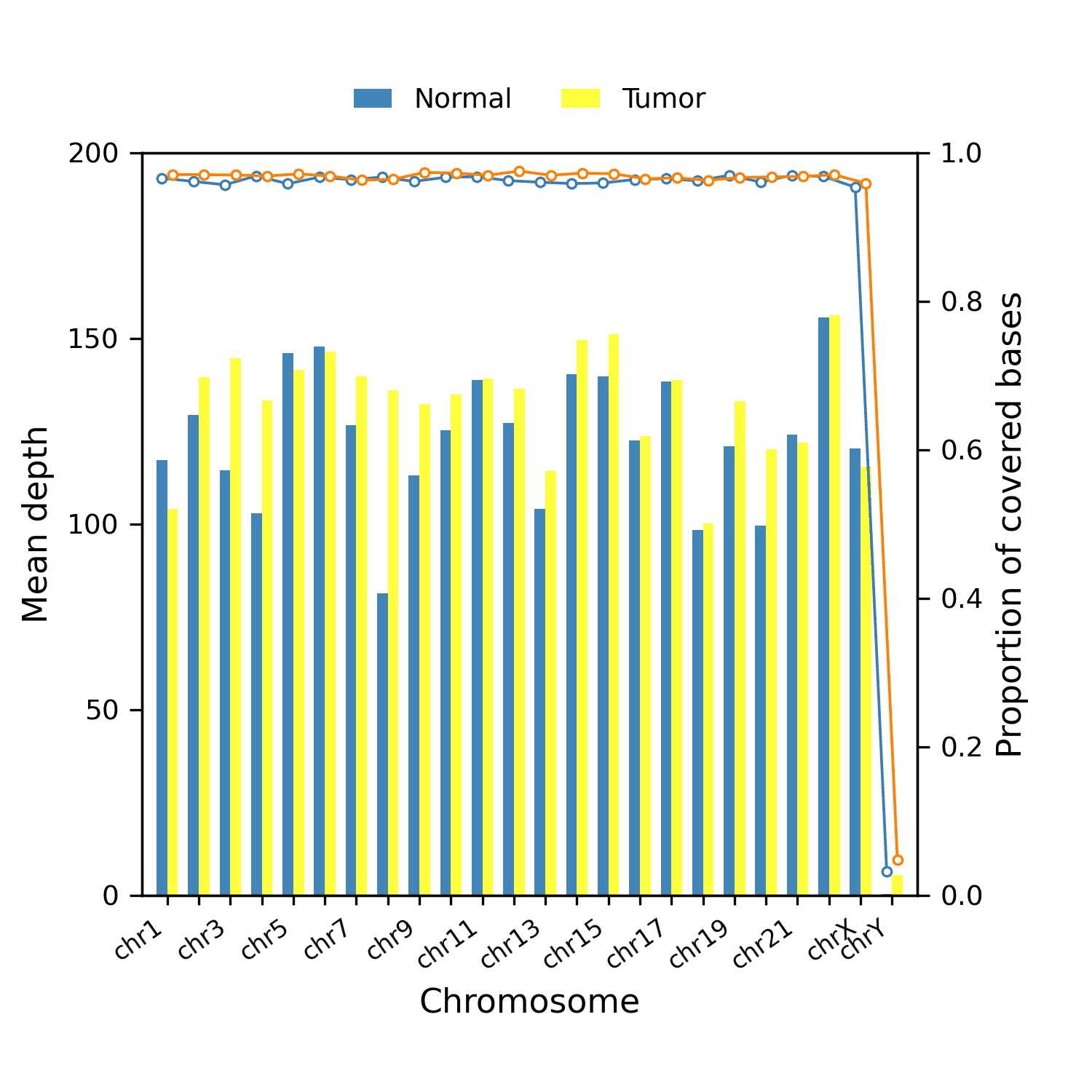
Chromosome Depth Coverage

Visualise sequencing depth across chromosomes to assess coverage distribution, capture consistency and regions with uneven read support.

Image
Image
1/1
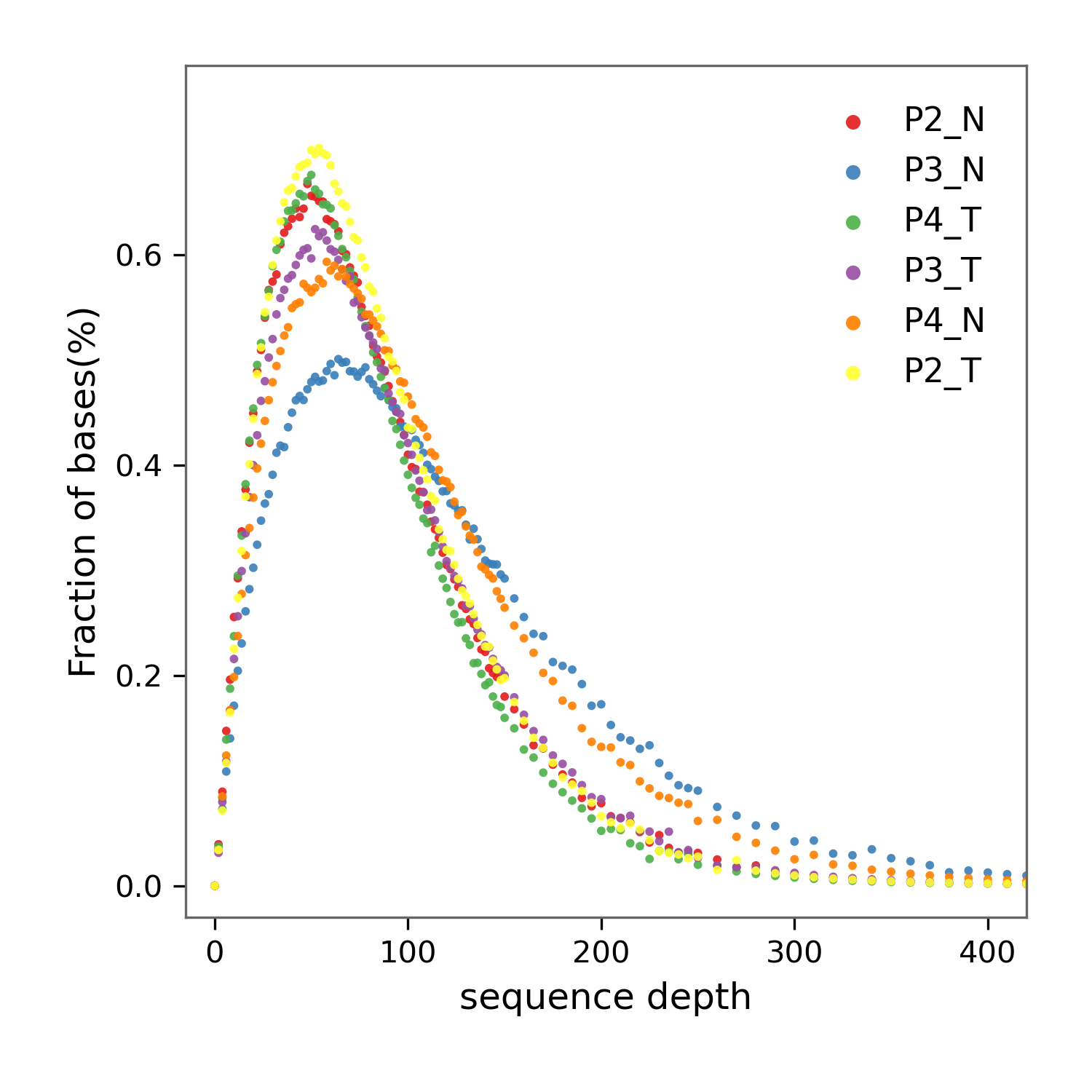
Sequence Depth Distribution

Review read-depth distribution across target regions to evaluate sequencing consistency and support reliable downstream variant analysis.

Image
Image
1/1
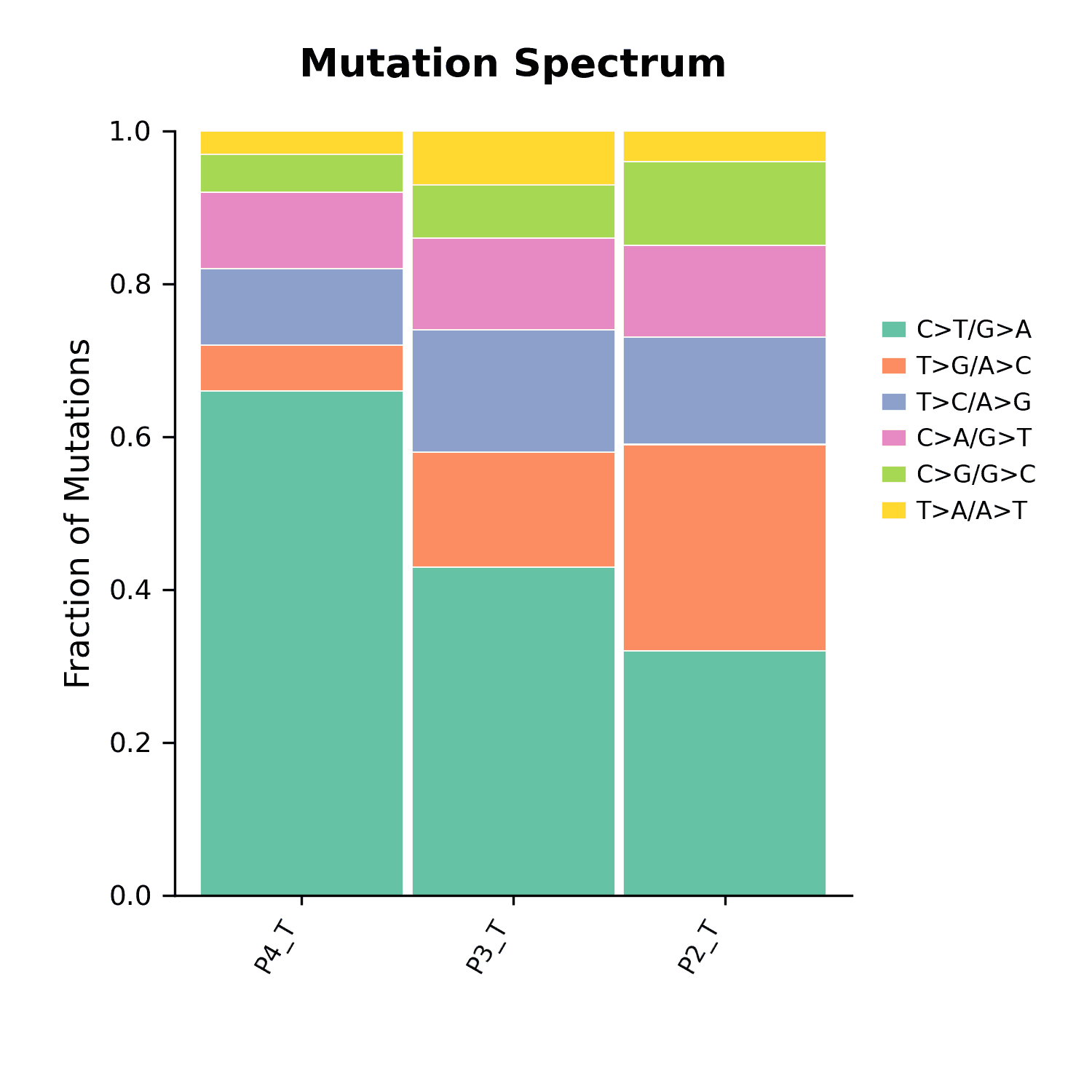
Mutation Spectrum

Summarise mutation types and base-substitution patterns to support interpretation of variant profiles across samples or study groups.

Image
Image
1/1
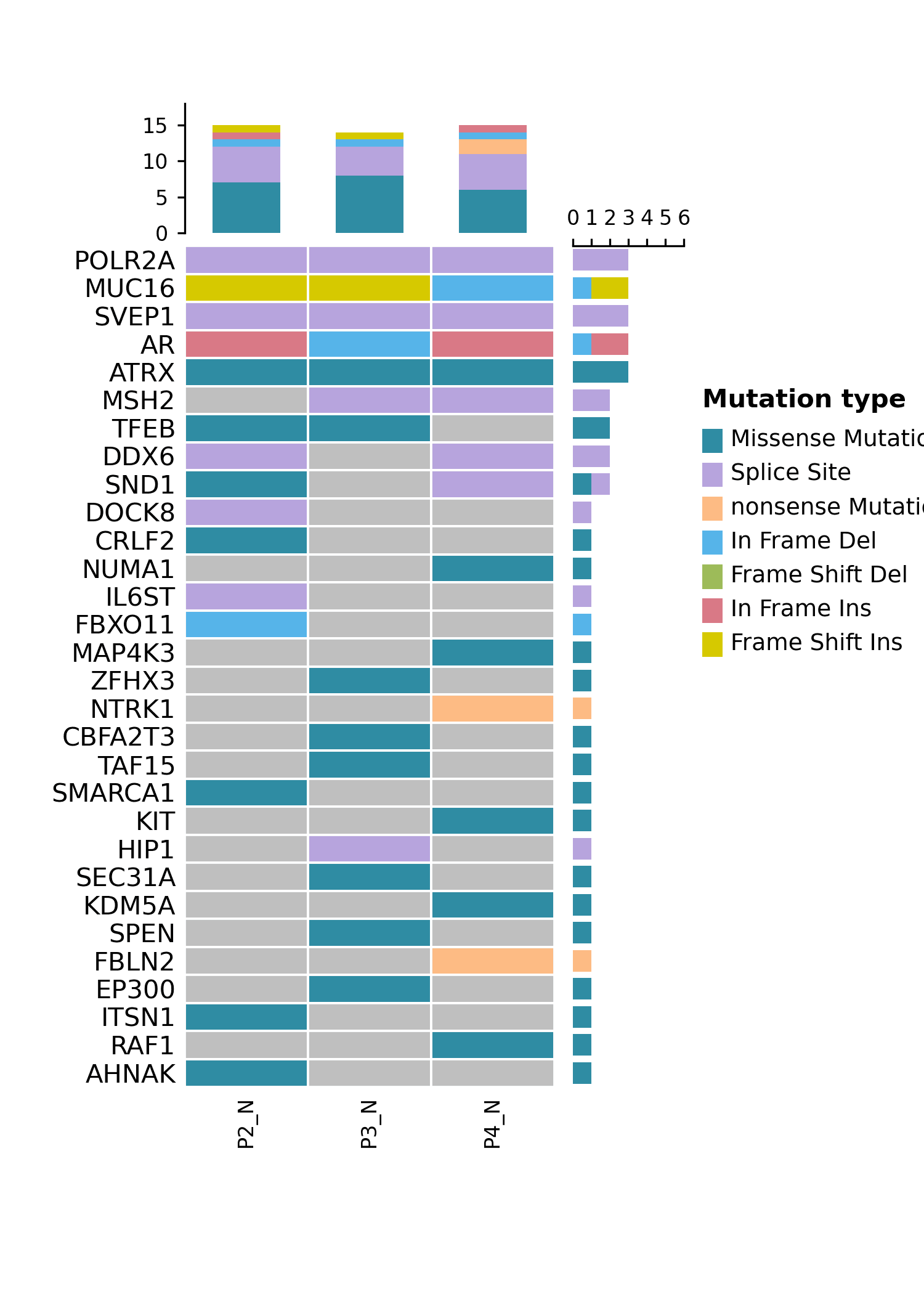
Mutated Gene Landscape

Display recurrently mutated genes and sample-level mutation patterns to explore key genomic features across a cohort.

Image
Image
1/1
Chromosome Depth Coverage

Visualise sequencing depth across chromosomes to assess coverage distribution, capture consistency and regions with uneven read support.

Image
Image
1/1
Sequence Depth Distribution

Review read-depth distribution across target regions to evaluate sequencing consistency and support reliable downstream variant analysis.

Image
Image
1/1
Mutation Spectrum

Summarise mutation types and base-substitution patterns to support interpretation of variant profiles across samples or study groups.

Image
Image
1/1
Mutated Gene Landscape

Display recurrently mutated genes and sample-level mutation patterns to explore key genomic features across a cohort.

Image
Image
1/1
Chromosome Depth Coverage

Visualise sequencing depth across chromosomes to assess coverage distribution, capture consistency and regions with uneven read support.

Image
Image
1/1
Sequence Depth Distribution

Review read-depth distribution across target regions to evaluate sequencing consistency and support reliable downstream variant analysis.

Image
Image
1/1
Mutation Spectrum

Summarise mutation types and base-substitution patterns to support interpretation of variant profiles across samples or study groups.

Image
Image
1/1
Mutated Gene Landscape

Display recurrently mutated genes and sample-level mutation patterns to explore key genomic features across a cohort.

Image
Image
1/1
Chromosome Depth Coverage

Visualise sequencing depth across chromosomes to assess coverage distribution, capture consistency and regions with uneven read support.

Image
Image
1/1
Sequence Depth Distribution

Review read-depth distribution across target regions to evaluate sequencing consistency and support reliable downstream variant analysis.

Image
Image
1/1
Mutation Spectrum

Summarise mutation types and base-substitution patterns to support interpretation of variant profiles across samples or study groups.

Image
Image
1/1
Mutated Gene Landscape

Display recurrently mutated genes and sample-level mutation patterns to explore key genomic features across a cohort.

Webinars

Getting Started with Genomics: Next Generation Sequencing Essentials for 2024

Discover the fundamentals of Next-Generation Sequencing (NGS) and learn how leading technologies such as Illumina, PacBio, and Oxford Nanopore are advancing genomic research and unlocking new possibilities in DNA analysis.

Learn More
(Getting Started with Genomics: Next Generation Sequencing Essentials for 2024)
Getting Started with Genomics: Next Generation Sequencing Essentials for 2024

Discover the fundamentals of Next-Generation Sequencing (NGS) and learn how leading technologies such as Illumina, PacBio, and Oxford Nanopore are advancing genomic research and unlocking new possibilities in DNA analysis.

Learn More
(Getting Started with Genomics: Next Generation Sequencing Essentials for 2024)
Getting Started with Genomics: Next Generation Sequencing Essentials for 2024

Discover the fundamentals of Next-Generation Sequencing (NGS) and learn how leading technologies such as Illumina, PacBio, and Oxford Nanopore are advancing genomic research and unlocking new possibilities in DNA analysis.

Learn More
(Getting Started with Genomics: Next Generation Sequencing Essentials for 2024)
Getting Started with Genomics: Next Generation Sequencing Essentials for 2024

Discover the fundamentals of Next-Generation Sequencing (NGS) and learn how leading technologies such as Illumina, PacBio, and Oxford Nanopore are advancing genomic research and unlocking new possibilities in DNA analysis.

Learn More
(Getting Started with Genomics: Next Generation Sequencing Essentials for 2024)

Frequently Asked Questions

What types of variants can WES detect?

WES detects SNVs and small insertions/deletions (InDels) within protein-coding regions. Exon-level copy number variation (CNV) analysis is also available.

How does WES differ from whole genome sequencing?

What sequencing depth do WES projects use?

Which exome capture panels does Novogene support?

What DNA quality does WES require?

Is WES suitable for rare disease research?

Can WES scale to large studies?

Explore Genomics Insights

Access webinars, brochures and case studies covering sequencing technologies, study planning and data interpretation.
View Webinar Library
(Explore Genomics Insights)
View Webinar Library
(Explore Genomics Insights)
Background
Background

Speak with a Specialist

Have a project in mind?


Send us your enquiry and a Novogene Europe specialist will be in touch.


Privacy PolicyCookie PolicyTerms
banner laptop bg
banner mobile bg

Whole Exome Sequencing

Protein-coding region sequencing for rare disease research, cancer genomics and population-scale variant studies.
OverviewOverview
BenefitsBenefits
ApplicationsApplications
SpecificationsSpecifications
ResourcesResources

Whole exome sequencing (WES) focuses on the protein-coding regions of the genome, where many functionally important variants are found. It provides a targeted and cost-effective approach for studying genetic variation in human disease research, cancer genomics, complex disease studies and population genetics.


Novogene Europe supports WES projects as part of its broader multi-omics service portfolio, combining exome capture, high-throughput sequencing, quality control and bioinformatics analysis to help researchers generate reliable data for genomics studies.

Service Highlights

Focused Exome Analysis

Target protein-coding regions of the genome to study variants associated with disease mechanisms, inherited conditions, complex traits and biological function.

Focused Exome Analysis

Target protein-coding regions of the genome to study variants associated with disease mechanisms, inherited conditions, complex traits and biological function.

Proven Capture Panels

Commercial exome capture panels, including IDT, Agilent SureSelect and Twist, support human WES studies and selected model organism applications.

Proven Capture Panels

Commercial exome capture panels, including IDT, Agilent SureSelect and Twist, support human WES studies and selected model organism applications.

Consistent Data Quality

High-throughput sequencing workflows and quality control processes support reliable data generation for downstream WES analysis.

Consistent Data Quality

High-throughput sequencing workflows and quality control processes support reliable data generation for downstream WES analysis.

Clear Variant Annotation

Bioinformatics analysis supports exon-based variant detection, annotation and reporting for disease-focused, cohort-based and exploratory genomics studies.

Clear Variant Annotation

Bioinformatics analysis supports exon-based variant detection, annotation and reporting for disease-focused, cohort-based and exploratory genomics studies.

Service Highlights

Focused Exome Analysis

Target protein-coding regions of the genome to study variants associated with disease mechanisms, inherited conditions, complex traits and biological function.

Focused Exome Analysis

Target protein-coding regions of the genome to study variants associated with disease mechanisms, inherited conditions, complex traits and biological function.

Proven Capture Panels

Commercial exome capture panels, including IDT, Agilent SureSelect and Twist, support human WES studies and selected model organism applications.

Proven Capture Panels

Commercial exome capture panels, including IDT, Agilent SureSelect and Twist, support human WES studies and selected model organism applications.

Consistent Data Quality

High-throughput sequencing workflows and quality control processes support reliable data generation for downstream WES analysis.

Consistent Data Quality

High-throughput sequencing workflows and quality control processes support reliable data generation for downstream WES analysis.

Clear Variant Annotation

Bioinformatics analysis supports exon-based variant detection, annotation and reporting for disease-focused, cohort-based and exploratory genomics studies.

Clear Variant Annotation

Bioinformatics analysis supports exon-based variant detection, annotation and reporting for disease-focused, cohort-based and exploratory genomics studies.

Applications

Disease Variant Research

WES supports exon-based variant analysis for studies of inherited disease, complex disease and disease-associated genomic variation, helping researchers focus on functionally relevant coding regions.

Disease Variant Research

WES supports exon-based variant analysis for studies of inherited disease, complex disease and disease-associated genomic variation, helping researchers focus on functionally relevant coding regions.

Cancer Genomics

Exome sequencing can support tumour-focused research by identifying somatic variants, copy-number changes and genomic alterations associated with cancer biology, progression and treatment response.

Cancer Genomics

Exome sequencing can support tumour-focused research by identifying somatic variants, copy-number changes and genomic alterations associated with cancer biology, progression and treatment response.

Population Studies

WES provides efficient coding-region data for studying genetic variation across cohorts, populations and ancestry-related research questions.

Population Studies

WES provides efficient coding-region data for studying genetic variation across cohorts, populations and ancestry-related research questions.

Model Organism Research

Selected exome panels can support mouse and other model organism studies, helping researchers investigate genetic variation, disease models and genotype–phenotype relationships.

Model Organism Research

Selected exome panels can support mouse and other model organism studies, helping researchers investigate genetic variation, disease models and genotype–phenotype relationships.

Applications

Disease Variant Research

WES supports exon-based variant analysis for studies of inherited disease, complex disease and disease-associated genomic variation, helping researchers focus on functionally relevant coding regions.

Disease Variant Research

WES supports exon-based variant analysis for studies of inherited disease, complex disease and disease-associated genomic variation, helping researchers focus on functionally relevant coding regions.

Cancer Genomics

Exome sequencing can support tumour-focused research by identifying somatic variants, copy-number changes and genomic alterations associated with cancer biology, progression and treatment response.

Cancer Genomics

Exome sequencing can support tumour-focused research by identifying somatic variants, copy-number changes and genomic alterations associated with cancer biology, progression and treatment response.

Population Studies

WES provides efficient coding-region data for studying genetic variation across cohorts, populations and ancestry-related research questions.

Population Studies

WES provides efficient coding-region data for studying genetic variation across cohorts, populations and ancestry-related research questions.

Model Organism Research

Selected exome panels can support mouse and other model organism studies, helping researchers investigate genetic variation, disease models and genotype–phenotype relationships.

Model Organism Research

Selected exome panels can support mouse and other model organism studies, helping researchers investigate genetic variation, disease models and genotype–phenotype relationships.

Specifications

Sample Requirements

The quantities listed are provided for reference only. Please download the Sample Requirements for detailed guidance, or contact us to discuss your project-specific requirements.

Sample TypeAmount (Qubit®)VolumeConcentrationPurity (NanoDrop™/Agarose Gel)
Genomic DNA≥300 ng≥20 ul≥15 ng/uLOD260/280 = 1.8-2.0;
no degradation, no
contamination
Fragments longer than 3000 bp
FFPE DNA≥300 ng≥20 ul≥15 ng/uLFragments longer than 1000 bp
cfDNA/ctDNA≥30 ng-≥0.5 ng/μLFragments of 170 bp or its multiples, no genomic DNA contamination

Sample Requirements

The quantities listed are provided for reference only. Please download the Sample Requirements for detailed guidance, or contact us to discuss your project-specific requirements.

Sample TypeAmount (Qubit®)VolumeConcentrationPurity (NanoDrop™/Agarose Gel)
Genomic DNA≥300 ng≥20 ul≥15 ng/uLOD260/280 = 1.8-2.0;
no degradation, no
contamination
Fragments longer than 3000 bp
FFPE DNA≥300 ng≥20 ul≥15 ng/uLFragments longer than 1000 bp
cfDNA/ctDNA≥30 ng-≥0.5 ng/μLFragments of 170 bp or its multiples, no genomic DNA contamination

Sample Requirements

The quantities listed are provided for reference only. Please download the Sample Requirements for detailed guidance, or contact us to discuss your project-specific requirements.

Sample TypeAmount (Qubit®)VolumeConcentrationPurity (NanoDrop™/Agarose Gel)
Genomic DNA≥300 ng≥20 ul≥15 ng/uLOD260/280 = 1.8-2.0;
no degradation, no
contamination
Fragments longer than 3000 bp
FFPE DNA≥300 ng≥20 ul≥15 ng/uLFragments longer than 1000 bp
cfDNA/ctDNA≥30 ng-≥0.5 ng/μLFragments of 170 bp or its multiples, no genomic DNA contamination

Sample Requirements

The quantities listed are provided for reference only. Please download the Sample Requirements for detailed guidance, or contact us to discuss your project-specific requirements.

Sample TypeAmount (Qubit®)VolumeConcentrationPurity (NanoDrop™/Agarose Gel)
Genomic DNA≥300 ng≥20 ul≥15 ng/uLOD260/280 = 1.8-2.0;
no degradation, no
contamination
Fragments longer than 3000 bp
FFPE DNA≥300 ng≥20 ul≥15 ng/uLFragments longer than 1000 bp
cfDNA/ctDNA≥30 ng-≥0.5 ng/μLFragments of 170 bp or its multiples, no genomic DNA contamination

Sequencing and Analysis

Recommended data outputs and analysis examples are provided for reference only. For detailed information, please contact us to discuss your project-specific analysis requirements.

Sequencing PlatformIllumina NovaSeq X Plus
Read LengthPaired-end 150 bp
Sequencing DepthFor Mendelian disorder/rare disease: effective sequencing depth above 50× (6G)
For tumor sample: effective sequencing depth above 100× (12G)
Data AnalysisData quality control
Alignment to a reference genome
SNP and InDel calling
Somatic SNP/InDel/CNV mutation detection (tumor-normal paired samples)

Sequencing and Analysis

Recommended data outputs and analysis examples are provided for reference only. For detailed information, please contact us to discuss your project-specific analysis requirements.

Sequencing PlatformIllumina NovaSeq X Plus
Read LengthPaired-end 150 bp
Sequencing DepthFor Mendelian disorder/rare disease: effective sequencing depth above 50× (6G)
For tumor sample: effective sequencing depth above 100× (12G)
Data AnalysisData quality control
Alignment to a reference genome
SNP and InDel calling
Somatic SNP/InDel/CNV mutation detection (tumor-normal paired samples)

Sequencing and Analysis

Recommended data outputs and analysis examples are provided for reference only. For detailed information, please contact us to discuss your project-specific analysis requirements.

Sequencing PlatformIllumina NovaSeq X Plus
Read LengthPaired-end 150 bp
Sequencing DepthFor Mendelian disorder/rare disease: effective sequencing depth above 50× (6G)
For tumor sample: effective sequencing depth above 100× (12G)
Data AnalysisData quality control
Alignment to a reference genome
SNP and InDel calling
Somatic SNP/InDel/CNV mutation detection (tumor-normal paired samples)

Sequencing and Analysis

Recommended data outputs and analysis examples are provided for reference only. For detailed information, please contact us to discuss your project-specific analysis requirements.

Sequencing PlatformIllumina NovaSeq X Plus
Read LengthPaired-end 150 bp
Sequencing DepthFor Mendelian disorder/rare disease: effective sequencing depth above 50× (6G)
For tumor sample: effective sequencing depth above 100× (12G)
Data AnalysisData quality control
Alignment to a reference genome
SNP and InDel calling
Somatic SNP/InDel/CNV mutation detection (tumor-normal paired samples)

Specifications

Sample Requirements

The quantities listed are provided for reference only. Please download the Sample Requirements for detailed guidance, or contact us to discuss your project-specific requirements.

Sample TypeAmount (Qubit®)VolumeConcentrationPurity (NanoDrop™/Agarose Gel)
Genomic DNA≥300 ng≥20 ul≥15 ng/uLOD260/280 = 1.8-2.0;
no degradation, no
contamination
Fragments longer than 3000 bp
FFPE DNA≥300 ng≥20 ul≥15 ng/uLFragments longer than 1000 bp
cfDNA/ctDNA≥30 ng-≥0.5 ng/μLFragments of 170 bp or its multiples, no genomic DNA contamination

Sample Requirements

The quantities listed are provided for reference only. Please download the Sample Requirements for detailed guidance, or contact us to discuss your project-specific requirements.

Sample TypeAmount (Qubit®)VolumeConcentrationPurity (NanoDrop™/Agarose Gel)
Genomic DNA≥300 ng≥20 ul≥15 ng/uLOD260/280 = 1.8-2.0;
no degradation, no
contamination
Fragments longer than 3000 bp
FFPE DNA≥300 ng≥20 ul≥15 ng/uLFragments longer than 1000 bp
cfDNA/ctDNA≥30 ng-≥0.5 ng/μLFragments of 170 bp or its multiples, no genomic DNA contamination

Sample Requirements

The quantities listed are provided for reference only. Please download the Sample Requirements for detailed guidance, or contact us to discuss your project-specific requirements.

Sample TypeAmount (Qubit®)VolumeConcentrationPurity (NanoDrop™/Agarose Gel)
Genomic DNA≥300 ng≥20 ul≥15 ng/uLOD260/280 = 1.8-2.0;
no degradation, no
contamination
Fragments longer than 3000 bp
FFPE DNA≥300 ng≥20 ul≥15 ng/uLFragments longer than 1000 bp
cfDNA/ctDNA≥30 ng-≥0.5 ng/μLFragments of 170 bp or its multiples, no genomic DNA contamination

Sample Requirements

The quantities listed are provided for reference only. Please download the Sample Requirements for detailed guidance, or contact us to discuss your project-specific requirements.

Sample TypeAmount (Qubit®)VolumeConcentrationPurity (NanoDrop™/Agarose Gel)
Genomic DNA≥300 ng≥20 ul≥15 ng/uLOD260/280 = 1.8-2.0;
no degradation, no
contamination
Fragments longer than 3000 bp
FFPE DNA≥300 ng≥20 ul≥15 ng/uLFragments longer than 1000 bp
cfDNA/ctDNA≥30 ng-≥0.5 ng/μLFragments of 170 bp or its multiples, no genomic DNA contamination

Sequencing and Analysis

Recommended data outputs and analysis examples are provided for reference only. For detailed information, please contact us to discuss your project-specific analysis requirements.

Sequencing PlatformIllumina NovaSeq X Plus
Read LengthPaired-end 150 bp
Sequencing DepthFor Mendelian disorder/rare disease: effective sequencing depth above 50× (6G)
For tumor sample: effective sequencing depth above 100× (12G)
Data AnalysisData quality control
Alignment to a reference genome
SNP and InDel calling
Somatic SNP/InDel/CNV mutation detection (tumor-normal paired samples)

Sequencing and Analysis

Recommended data outputs and analysis examples are provided for reference only. For detailed information, please contact us to discuss your project-specific analysis requirements.

Sequencing PlatformIllumina NovaSeq X Plus
Read LengthPaired-end 150 bp
Sequencing DepthFor Mendelian disorder/rare disease: effective sequencing depth above 50× (6G)
For tumor sample: effective sequencing depth above 100× (12G)
Data AnalysisData quality control
Alignment to a reference genome
SNP and InDel calling
Somatic SNP/InDel/CNV mutation detection (tumor-normal paired samples)

Sequencing and Analysis

Recommended data outputs and analysis examples are provided for reference only. For detailed information, please contact us to discuss your project-specific analysis requirements.

Sequencing PlatformIllumina NovaSeq X Plus
Read LengthPaired-end 150 bp
Sequencing DepthFor Mendelian disorder/rare disease: effective sequencing depth above 50× (6G)
For tumor sample: effective sequencing depth above 100× (12G)
Data AnalysisData quality control
Alignment to a reference genome
SNP and InDel calling
Somatic SNP/InDel/CNV mutation detection (tumor-normal paired samples)

Sequencing and Analysis

Recommended data outputs and analysis examples are provided for reference only. For detailed information, please contact us to discuss your project-specific analysis requirements.

Sequencing PlatformIllumina NovaSeq X Plus
Read LengthPaired-end 150 bp
Sequencing DepthFor Mendelian disorder/rare disease: effective sequencing depth above 50× (6G)
For tumor sample: effective sequencing depth above 100× (12G)
Data AnalysisData quality control
Alignment to a reference genome
SNP and InDel calling
Somatic SNP/InDel/CNV mutation detection (tumor-normal paired samples)

Resources

Example Analysis Output

Image
Image
1/1
Chromosome Depth Coverage

Visualise sequencing depth across chromosomes to assess coverage distribution, capture consistency and regions with uneven read support.

Image
Image
1/1
Sequence Depth Distribution

Review read-depth distribution across target regions to evaluate sequencing consistency and support reliable downstream variant analysis.

Image
Image
1/1
Mutation Spectrum

Summarise mutation types and base-substitution patterns to support interpretation of variant profiles across samples or study groups.

Image
Image
1/1
Mutated Gene Landscape

Display recurrently mutated genes and sample-level mutation patterns to explore key genomic features across a cohort.

Image
Image
1/1
Chromosome Depth Coverage

Visualise sequencing depth across chromosomes to assess coverage distribution, capture consistency and regions with uneven read support.

Image
Image
1/1
Sequence Depth Distribution

Review read-depth distribution across target regions to evaluate sequencing consistency and support reliable downstream variant analysis.

Image
Image
1/1
Mutation Spectrum

Summarise mutation types and base-substitution patterns to support interpretation of variant profiles across samples or study groups.

Image
Image
1/1
Mutated Gene Landscape

Display recurrently mutated genes and sample-level mutation patterns to explore key genomic features across a cohort.

Image
Image
1/1
Chromosome Depth Coverage

Visualise sequencing depth across chromosomes to assess coverage distribution, capture consistency and regions with uneven read support.

Image
Image
1/1
Sequence Depth Distribution

Review read-depth distribution across target regions to evaluate sequencing consistency and support reliable downstream variant analysis.

Image
Image
1/1
Mutation Spectrum

Summarise mutation types and base-substitution patterns to support interpretation of variant profiles across samples or study groups.

Image
Image
1/1
Mutated Gene Landscape

Display recurrently mutated genes and sample-level mutation patterns to explore key genomic features across a cohort.

Image
Image
1/1
Chromosome Depth Coverage

Visualise sequencing depth across chromosomes to assess coverage distribution, capture consistency and regions with uneven read support.

Image
Image
1/1
Sequence Depth Distribution

Review read-depth distribution across target regions to evaluate sequencing consistency and support reliable downstream variant analysis.

Image
Image
1/1
Mutation Spectrum

Summarise mutation types and base-substitution patterns to support interpretation of variant profiles across samples or study groups.

Image
Image
1/1
Mutated Gene Landscape

Display recurrently mutated genes and sample-level mutation patterns to explore key genomic features across a cohort.

Webinars

Getting Started with Genomics: Next Generation Sequencing Essentials for 2024

Discover the fundamentals of Next-Generation Sequencing (NGS) and learn how leading technologies such as Illumina, PacBio, and Oxford Nanopore are advancing genomic research and unlocking new possibilities in DNA analysis.

Learn More
(Getting Started with Genomics: Next Generation Sequencing Essentials for 2024)
Getting Started with Genomics: Next Generation Sequencing Essentials for 2024

Discover the fundamentals of Next-Generation Sequencing (NGS) and learn how leading technologies such as Illumina, PacBio, and Oxford Nanopore are advancing genomic research and unlocking new possibilities in DNA analysis.

Learn More
(Getting Started with Genomics: Next Generation Sequencing Essentials for 2024)
Getting Started with Genomics: Next Generation Sequencing Essentials for 2024

Discover the fundamentals of Next-Generation Sequencing (NGS) and learn how leading technologies such as Illumina, PacBio, and Oxford Nanopore are advancing genomic research and unlocking new possibilities in DNA analysis.

Learn More
(Getting Started with Genomics: Next Generation Sequencing Essentials for 2024)
Getting Started with Genomics: Next Generation Sequencing Essentials for 2024

Discover the fundamentals of Next-Generation Sequencing (NGS) and learn how leading technologies such as Illumina, PacBio, and Oxford Nanopore are advancing genomic research and unlocking new possibilities in DNA analysis.

Learn More
(Getting Started with Genomics: Next Generation Sequencing Essentials for 2024)

Frequently Asked Questions

What types of variants can WES detect?

WES detects SNVs and small insertions/deletions (InDels) within protein-coding regions. Exon-level copy number variation (CNV) analysis is also available.

How does WES differ from whole genome sequencing?

What sequencing depth do WES projects use?

Which exome capture panels does Novogene support?

What DNA quality does WES require?

Is WES suitable for rare disease research?

Can WES scale to large studies?

Explore Genomics Insights

Access webinars, brochures and case studies covering sequencing technologies, study planning and data interpretation.
View Webinar Library
(Explore Genomics Insights)
View Webinar Library
(Explore Genomics Insights)
Background
Background

Speak with a Specialist

Have a project in mind?


Send us your enquiry and a Novogene Europe specialist will be in touch.


Privacy PolicyCookie PolicyTerms