
• Cart
    • Quote
    • Enquiry
    • Cart
    • Quote
    • Enquiry
Novogene Europe
  • Novogene Europe
  • Genomics
    • Human Whole Genome Sequencing
    • Whole Exome Sequencing
    • Plant and Animal Whole Genome Sequencing
    • Plant and Animal De novo Sequencing
    • Microbial Whole Genome Sequencing
    • Microbial De novo Sequencing
    • Whole Plasmid SequencingOrder Online!
    Proteomics
    • Olink ProteomicsNew!
    Epigenomics
    • DNA Methylation SequencingUpdated!
    • Chromatin Immunoprecipitation Sequencing (ChIP-seq)
    • RNA Immunoprecipitation Sequencing (RIP-seq)
    Metabolomics
    • Untargeted MetabolomicsComing Soon!
    Transcriptomics
    • mRNA Sequencing
    • Small RNA Sequencing (sRNA‑seq)
    • Circular RNA Sequencing (circRNA-seq)
    • Total RNA Sequencing
    • Whole Transcriptome Sequencing
    • Full-Length Transcriptome Sequencing
    • Prokaryotic RNA Sequencing
    • Metatranscriptome Sequencing
    Metagenomics
    • Amplicon SequencingOrder Online!
    • Shotgun Metagenomics Sequencing
    Single Cell & Spatial Omics
    • 10X Single Cell Gene Expression
    • 10X Single Cell Immune Profiling
    • 10X Visium HD Spatial Gene Expression
    Premade Library
    • Sequencing Only on Illumina® Sequencer
    • Sequencing Only on Element SequencerNew!
    • Sequencing Only on PacBio Sequencer
    Translational Research
    • Accredited & Validated Clinical Research Sequencing
  • PromotionsPromotions
    • Platforms
    • Automated Delivery Platform (Falcon)
    • Bioinformatics Analysis Tool (NovoMagic)
    • Customer Service System (CSS)
    • Customer Support
    • Webinars
    • Case Study
    • Blog
    • Brochure
    • Cancer Research
    • Immuno-oncology
    • Agrigenomics
    • Environment
    • Food Science
    • Human Microbiome
    • Plant and Animal Microbiome
    • Drug Discovery and Development
    • Rare and Complex Diseases
    • About Us
    • News & Events
    • Careers
    • Our Locations
  • Contact UsContact Us
    • Amplicon Sequencing
    • Whole Plasmid Sequencing

ServicesServices menu

ResourcesResources menu

SupportSupport menu

CompanyCompany menu

Services
Human Whole Genome SequencingWhole Exome SequencingPlant and Animal Whole Genome SequencingPlant and Animal De novo SequencingDNA Methylation SequencingmRNA SequencingFull-Length Transcriptome SequencingWhole Transcriptome SequencingMetatranscriptome SequencingShotgun Metagenomics SequencingAmplicon SequencingWhole Plasmid Sequencing10X Single Cell Gene Expression10X Single Cell Immune Profiling10X Visium HD Spatial Gene ExpressionOlink ProteomicsUntargeted MetabolomicsAccredited & Validated Clinical Research Sequencing
Resources
WebinarsCase StudyBlogBrochure
Support
PlatformBioinformatics Analysis Tool (NovoMagic)Customer Service System (CSS)Customer Support
Company
About UsNews & EventsLocationContact Us
LinkedInLinkedIn hoverYouTubeYouTube hoverInstagramInstagram hoverXX hover
Copyright © 2026 Novogene Inc. All rights reserved.For Research Use Only. Not for Clinical Diagnostic Use.
    • Cart
    • Quote
    • Enquiry
    • Cart
    • Quote
    • Enquiry
Novogene Europe
  • Novogene Europe
  • Genomics
    • Human Whole Genome Sequencing
    • Whole Exome Sequencing
    • Plant and Animal Whole Genome Sequencing
    • Plant and Animal De novo Sequencing
    • Microbial Whole Genome Sequencing
    • Microbial De novo Sequencing
    • Whole Plasmid SequencingOrder Online!
    Proteomics
    • Olink ProteomicsNew!
    Epigenomics
    • DNA Methylation SequencingUpdated!
    • Chromatin Immunoprecipitation Sequencing (ChIP-seq)
    • RNA Immunoprecipitation Sequencing (RIP-seq)
    Metabolomics
    • Untargeted MetabolomicsComing Soon!
    Transcriptomics
    • mRNA Sequencing
    • Small RNA Sequencing (sRNA‑seq)
    • Circular RNA Sequencing (circRNA-seq)
    • Total RNA Sequencing
    • Whole Transcriptome Sequencing
    • Full-Length Transcriptome Sequencing
    • Prokaryotic RNA Sequencing
    • Metatranscriptome Sequencing
    Metagenomics
    • Amplicon SequencingOrder Online!
    • Shotgun Metagenomics Sequencing
    Single Cell & Spatial Omics
    • 10X Single Cell Gene Expression
    • 10X Single Cell Immune Profiling
    • 10X Visium HD Spatial Gene Expression
    Premade Library
    • Sequencing Only on Illumina® Sequencer
    • Sequencing Only on Element SequencerNew!
    • Sequencing Only on PacBio Sequencer
    Translational Research
    • Accredited & Validated Clinical Research Sequencing
  • PromotionsPromotions
    • Platforms
    • Automated Delivery Platform (Falcon)
    • Bioinformatics Analysis Tool (NovoMagic)
    • Customer Service System (CSS)
    • Customer Support
    • Webinars
    • Case Study
    • Blog
    • Brochure
    • Cancer Research
    • Immuno-oncology
    • Agrigenomics
    • Environment
    • Food Science
    • Human Microbiome
    • Plant and Animal Microbiome
    • Drug Discovery and Development
    • Rare and Complex Diseases
    • About Us
    • News & Events
    • Careers
    • Our Locations
  • Contact UsContact Us
    • Amplicon Sequencing
    • Whole Plasmid Sequencing

ServicesServices menu

ResourcesResources menu

SupportSupport menu

CompanyCompany menu

Services
Human Whole Genome SequencingWhole Exome SequencingPlant and Animal Whole Genome SequencingPlant and Animal De novo SequencingDNA Methylation SequencingmRNA SequencingFull-Length Transcriptome SequencingWhole Transcriptome SequencingMetatranscriptome SequencingShotgun Metagenomics SequencingAmplicon SequencingWhole Plasmid Sequencing10X Single Cell Gene Expression10X Single Cell Immune Profiling10X Visium HD Spatial Gene ExpressionOlink ProteomicsUntargeted MetabolomicsAccredited & Validated Clinical Research Sequencing
Resources
WebinarsCase StudyBlogBrochure
Support
PlatformBioinformatics Analysis Tool (NovoMagic)Customer Service System (CSS)Customer Support
Company
About UsNews & EventsLocationContact Us
LinkedInLinkedIn hoverYouTubeYouTube hoverInstagramInstagram hoverXX hover
Copyright © 2026 Novogene Inc. All rights reserved.For Research Use Only. Not for Clinical Diagnostic Use.
banner laptop bg
banner mobile bg

DNA Methylation Sequencing

Genome-wide, targeted and advanced methylation sequencing solutions to support epigenomics, disease research and multiomics studies

DNA methylation is one of the most widely studied epigenetic marks and plays an important role in gene regulation, development, disease progression and environmental response. By adding regulatory context to genomic information, methylation analysis can help researchers understand why the same DNA sequence may lead to different biological outcomes across cell types, tissues or conditions.


Novogene Europe provides a range of DNA methylation sequencing services to support genome-wide, targeted and advanced methylation analysis. Our portfolio includes established bisulfite-based methods, enzyme-based methylation sequencing and newer approaches designed to preserve sequence complexity while supporting high-resolution 5mC analysis.

WGBSWGBS
RRBSRRBS
Enzyme Methyl-seqEnzyme Methyl-seq
TAPS+TAPS+
5-base Sequencing5-base Sequencing
ResourcesResources

Whole Genome Bisulfite Sequencing

Comprehensive genome-wide methylation profiling


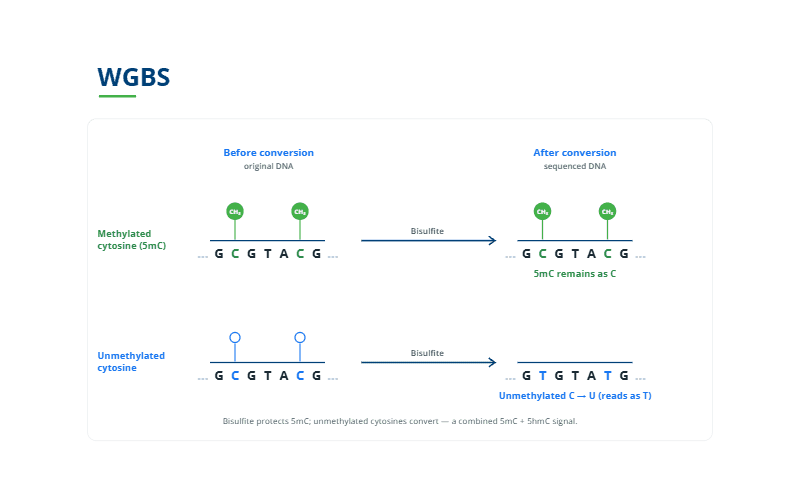
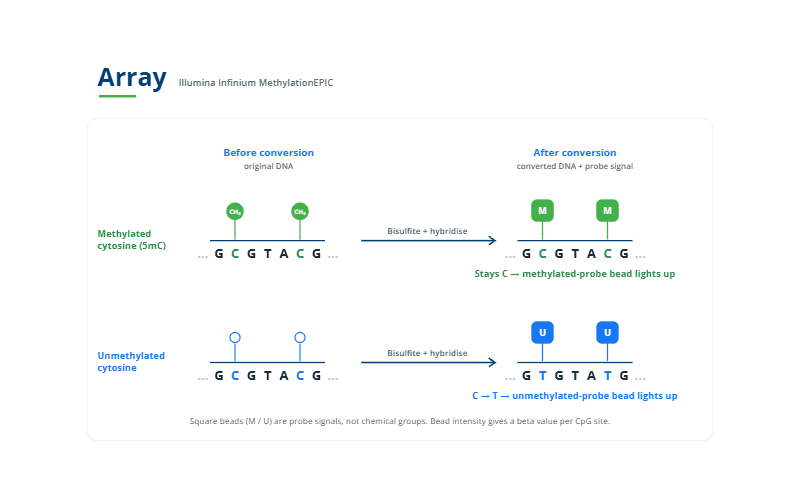
Whole Genome Bisulfite Sequencing (WGBS) is an established approach for analysing DNA methylation across the genome at single-base resolution. By using bisulfite conversion, WGBS enables researchers to profile methylation patterns without prior selection of target regions, making it suitable for methylome-wide discovery studies.


WGBS can support the identification of differentially methylated regions, comparison of methylation profiles between samples or study groups, and integration with gene expression or other omics datasets. It is commonly used in epigenomics, developmental biology, cancer research, plant and animal studies, and environmental response research.

View Sample Requirements
Preview

Comprehensive genome-wide methylation profiling


Whole Genome Bisulfite Sequencing (WGBS) is an established approach for analysing DNA methylation across the genome at single-base resolution. By using bisulfite conversion, WGBS enables researchers to profile methylation patterns without prior selection of target regions, making it suitable for methylome-wide discovery studies.


WGBS can support the identification of differentially methylated regions, comparison of methylation profiles between samples or study groups, and integration with gene expression or other omics datasets. It is commonly used in epigenomics, developmental biology, cancer research, plant and animal studies, and environmental response research.

View Sample Requirements
Preview

Whole Genome Bisulfite Sequencing

Comprehensive genome-wide methylation profiling


Whole Genome Bisulfite Sequencing (WGBS) is an established approach for analysing DNA methylation across the genome at single-base resolution. By using bisulfite conversion, WGBS enables researchers to profile methylation patterns without prior selection of target regions, making it suitable for methylome-wide discovery studies.


WGBS can support the identification of differentially methylated regions, comparison of methylation profiles between samples or study groups, and integration with gene expression or other omics datasets. It is commonly used in epigenomics, developmental biology, cancer research, plant and animal studies, and environmental response research.

View Sample Requirements
Preview

Comprehensive genome-wide methylation profiling


Whole Genome Bisulfite Sequencing (WGBS) is an established approach for analysing DNA methylation across the genome at single-base resolution. By using bisulfite conversion, WGBS enables researchers to profile methylation patterns without prior selection of target regions, making it suitable for methylome-wide discovery studies.


WGBS can support the identification of differentially methylated regions, comparison of methylation profiles between samples or study groups, and integration with gene expression or other omics datasets. It is commonly used in epigenomics, developmental biology, cancer research, plant and animal studies, and environmental response research.

View Sample Requirements
Preview

Reduced Representation Bisulfite Sequencing

Cost-effective methylation profiling in CpG-rich regions


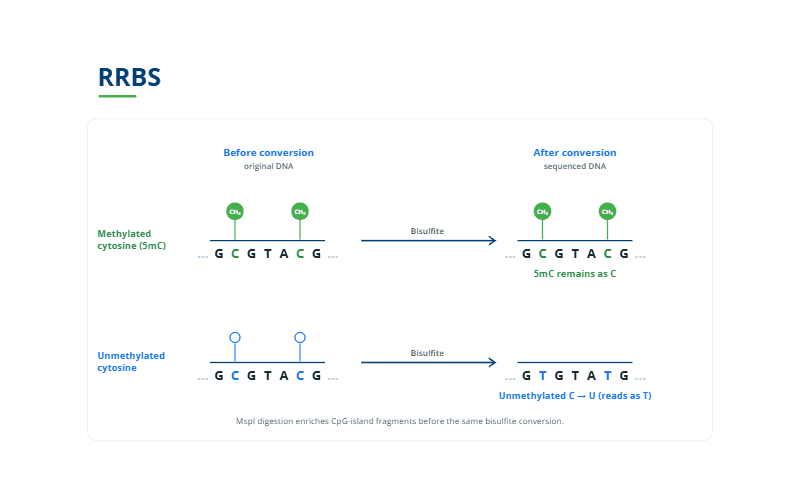
Reduced Representation Bisulfite Sequencing (RRBS) focuses sequencing coverage on CpG-rich regions of the genome, including promoters, CpG islands and other regulatory regions. By reducing the portion of the genome being sequenced, RRBS provides a practical option for projects where targeted methylation information is sufficient.


RRBS is suitable for comparative methylation studies, biomarker research, disease mechanism investigation and projects involving larger sample numbers where whole-genome methylation sequencing may not be required. It can help researchers examine methylation changes in functionally relevant genomic regions while managing sequencing depth and project scale.

View Sample Requirements
Preview

Cost-effective methylation profiling in CpG-rich regions


Reduced Representation Bisulfite Sequencing (RRBS) focuses sequencing coverage on CpG-rich regions of the genome, including promoters, CpG islands and other regulatory regions. By reducing the portion of the genome being sequenced, RRBS provides a practical option for projects where targeted methylation information is sufficient.


RRBS is suitable for comparative methylation studies, biomarker research, disease mechanism investigation and projects involving larger sample numbers where whole-genome methylation sequencing may not be required. It can help researchers examine methylation changes in functionally relevant genomic regions while managing sequencing depth and project scale.

View Sample Requirements
Preview

Reduced Representation Bisulfite Sequencing

Cost-effective methylation profiling in CpG-rich regions


Reduced Representation Bisulfite Sequencing (RRBS) focuses sequencing coverage on CpG-rich regions of the genome, including promoters, CpG islands and other regulatory regions. By reducing the portion of the genome being sequenced, RRBS provides a practical option for projects where targeted methylation information is sufficient.


RRBS is suitable for comparative methylation studies, biomarker research, disease mechanism investigation and projects involving larger sample numbers where whole-genome methylation sequencing may not be required. It can help researchers examine methylation changes in functionally relevant genomic regions while managing sequencing depth and project scale.

View Sample Requirements
Preview

Cost-effective methylation profiling in CpG-rich regions


Reduced Representation Bisulfite Sequencing (RRBS) focuses sequencing coverage on CpG-rich regions of the genome, including promoters, CpG islands and other regulatory regions. By reducing the portion of the genome being sequenced, RRBS provides a practical option for projects where targeted methylation information is sufficient.


RRBS is suitable for comparative methylation studies, biomarker research, disease mechanism investigation and projects involving larger sample numbers where whole-genome methylation sequencing may not be required. It can help researchers examine methylation changes in functionally relevant genomic regions while managing sequencing depth and project scale.

View Sample Requirements
Preview

Enzymatic Methylation Sequencing

Enzyme-based, bisulfite-free genome-wide methylation analysis


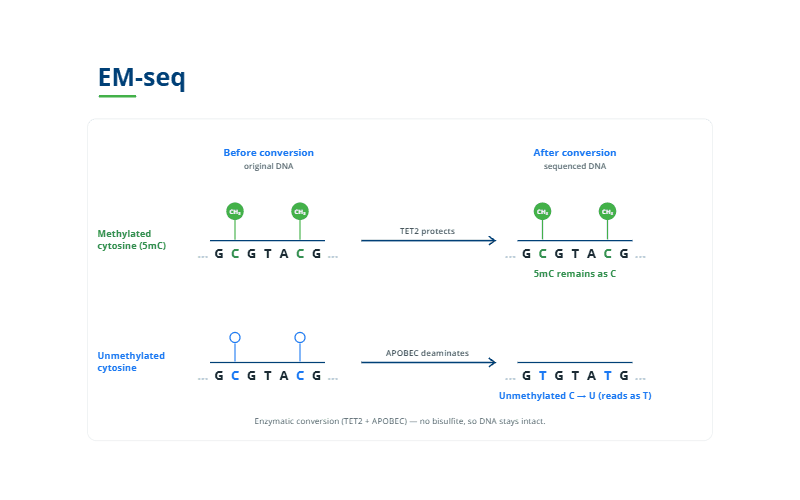
Enzyme-based methylation sequencing provides a bisulfite-free approach for genome-wide DNA methylation analysis. Instead of harsh chemical conversion, this workflow uses enzymatic conversion chemistry to distinguish methylated and unmethylated cytosines while helping to preserve DNA integrity and library complexity.


This approach may be useful for studies where DNA quality, input amount or sample value is an important consideration. It supports methylation pattern discovery, differentially methylated region analysis and comparative methylome studies, while offering an alternative genome-wide workflow for researchers looking beyond conventional bisulfite-based methods.

View Sample Requirements
Preview

Enzyme-based, bisulfite-free genome-wide methylation analysis


Enzyme-based methylation sequencing provides a bisulfite-free approach for genome-wide DNA methylation analysis. Instead of harsh chemical conversion, this workflow uses enzymatic conversion chemistry to distinguish methylated and unmethylated cytosines while helping to preserve DNA integrity and library complexity.


This approach may be useful for studies where DNA quality, input amount or sample value is an important consideration. It supports methylation pattern discovery, differentially methylated region analysis and comparative methylome studies, while offering an alternative genome-wide workflow for researchers looking beyond conventional bisulfite-based methods.

View Sample Requirements
Preview

Enzymatic Methylation Sequencing

Enzyme-based, bisulfite-free genome-wide methylation analysis


Enzyme-based methylation sequencing provides a bisulfite-free approach for genome-wide DNA methylation analysis. Instead of harsh chemical conversion, this workflow uses enzymatic conversion chemistry to distinguish methylated and unmethylated cytosines while helping to preserve DNA integrity and library complexity.


This approach may be useful for studies where DNA quality, input amount or sample value is an important consideration. It supports methylation pattern discovery, differentially methylated region analysis and comparative methylome studies, while offering an alternative genome-wide workflow for researchers looking beyond conventional bisulfite-based methods.

View Sample Requirements
Preview

Enzyme-based, bisulfite-free genome-wide methylation analysis


Enzyme-based methylation sequencing provides a bisulfite-free approach for genome-wide DNA methylation analysis. Instead of harsh chemical conversion, this workflow uses enzymatic conversion chemistry to distinguish methylated and unmethylated cytosines while helping to preserve DNA integrity and library complexity.


This approach may be useful for studies where DNA quality, input amount or sample value is an important consideration. It supports methylation pattern discovery, differentially methylated region analysis and comparative methylome studies, while offering an alternative genome-wide workflow for researchers looking beyond conventional bisulfite-based methods.

View Sample Requirements
Preview

TAPS+ Sequencing

Preserved-complexity methylation sequencing for integrated methylome and genomic analysis


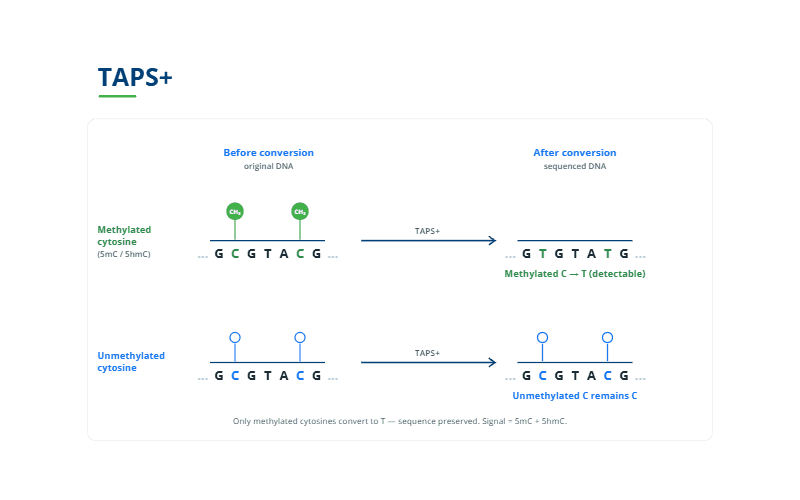
TAPS+ Sequencing provides a preserved-complexity approach to DNA methylation analysis. Instead of converting a large proportion of cytosines, TAPS+ targets methylated cytosines while leaving much of the original DNA sequence unchanged, helping to maintain sequence complexity and support improved mapping performance.


This approach can be useful for projects where methylation analysis needs to be combined with broader genomic interpretation. TAPS+ supports high-resolution methylation profiling and may be considered for studies involving complex biology, fragmented or challenging samples, translational research, oncology studies and biomarker discovery.

View Sample Requirements
Preview

Preserved-complexity methylation sequencing for integrated methylome and genomic analysis


TAPS+ Sequencing provides a preserved-complexity approach to DNA methylation analysis. Instead of converting a large proportion of cytosines, TAPS+ targets methylated cytosines while leaving much of the original DNA sequence unchanged, helping to maintain sequence complexity and support improved mapping performance.


This approach can be useful for projects where methylation analysis needs to be combined with broader genomic interpretation. TAPS+ supports high-resolution methylation profiling and may be considered for studies involving complex biology, fragmented or challenging samples, translational research, oncology studies and biomarker discovery.

View Sample Requirements
Preview

TAPS+ Sequencing

Preserved-complexity methylation sequencing for integrated methylome and genomic analysis


TAPS+ Sequencing provides a preserved-complexity approach to DNA methylation analysis. Instead of converting a large proportion of cytosines, TAPS+ targets methylated cytosines while leaving much of the original DNA sequence unchanged, helping to maintain sequence complexity and support improved mapping performance.


This approach can be useful for projects where methylation analysis needs to be combined with broader genomic interpretation. TAPS+ supports high-resolution methylation profiling and may be considered for studies involving complex biology, fragmented or challenging samples, translational research, oncology studies and biomarker discovery.

View Sample Requirements
Preview

Preserved-complexity methylation sequencing for integrated methylome and genomic analysis


TAPS+ Sequencing provides a preserved-complexity approach to DNA methylation analysis. Instead of converting a large proportion of cytosines, TAPS+ targets methylated cytosines while leaving much of the original DNA sequence unchanged, helping to maintain sequence complexity and support improved mapping performance.


This approach can be useful for projects where methylation analysis needs to be combined with broader genomic interpretation. TAPS+ supports high-resolution methylation profiling and may be considered for studies involving complex biology, fragmented or challenging samples, translational research, oncology studies and biomarker discovery.

View Sample Requirements
Preview

5-base Sequencing

Focused 5mC and genomic analysis from a single sequencing workflow


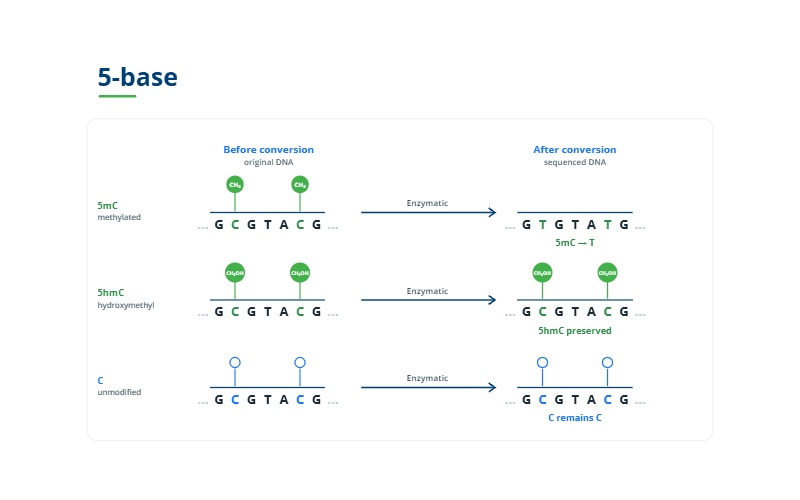
5-base Sequencing is designed to detect the four standard DNA bases together with 5-methylcytosine (5mC) in a single sequencing workflow. By focusing on 5mC conversion while preserving much of the original genome sequence, it supports methylation profiling alongside variant-aware genomic analysis from the same sample.


This service may be suitable for studies where researchers want to investigate methylation patterns and genetic variation together, including cancer research, rare disease research, biomarker studies and cohort-scale projects. It provides a practical option for projects requiring a focused 5mC signal and variant-aware interpretation.

View Sample Requirements
Preview

Focused 5mC and genomic analysis from a single sequencing workflow


5-base Sequencing is designed to detect the four standard DNA bases together with 5-methylcytosine (5mC) in a single sequencing workflow. By focusing on 5mC conversion while preserving much of the original genome sequence, it supports methylation profiling alongside variant-aware genomic analysis from the same sample.


This service may be suitable for studies where researchers want to investigate methylation patterns and genetic variation together, including cancer research, rare disease research, biomarker studies and cohort-scale projects. It provides a practical option for projects requiring a focused 5mC signal and variant-aware interpretation.

View Sample Requirements
Preview

5-base Sequencing

Focused 5mC and genomic analysis from a single sequencing workflow


5-base Sequencing is designed to detect the four standard DNA bases together with 5-methylcytosine (5mC) in a single sequencing workflow. By focusing on 5mC conversion while preserving much of the original genome sequence, it supports methylation profiling alongside variant-aware genomic analysis from the same sample.


This service may be suitable for studies where researchers want to investigate methylation patterns and genetic variation together, including cancer research, rare disease research, biomarker studies and cohort-scale projects. It provides a practical option for projects requiring a focused 5mC signal and variant-aware interpretation.

View Sample Requirements
Preview

Focused 5mC and genomic analysis from a single sequencing workflow


5-base Sequencing is designed to detect the four standard DNA bases together with 5-methylcytosine (5mC) in a single sequencing workflow. By focusing on 5mC conversion while preserving much of the original genome sequence, it supports methylation profiling alongside variant-aware genomic analysis from the same sample.


This service may be suitable for studies where researchers want to investigate methylation patterns and genetic variation together, including cancer research, rare disease research, biomarker studies and cohort-scale projects. It provides a practical option for projects requiring a focused 5mC signal and variant-aware interpretation.

View Sample Requirements
Preview

Example Analysis Output

Image
Image
1/1
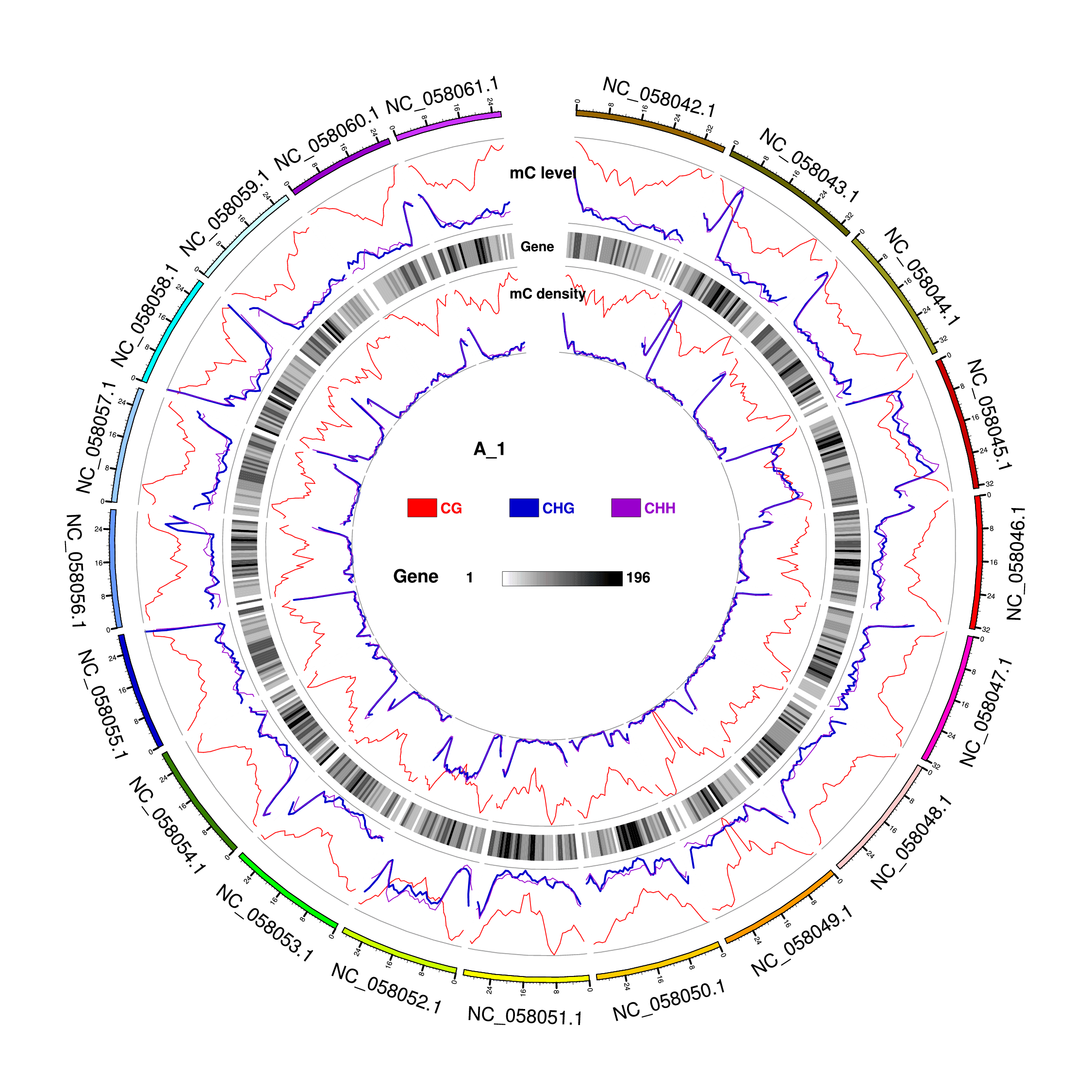
Genome-wide Profile

Visualise genome-wide methylation patterns across chromosomes to support single-sample methylome assessment and exploratory analysis.

Image
Image
1/1
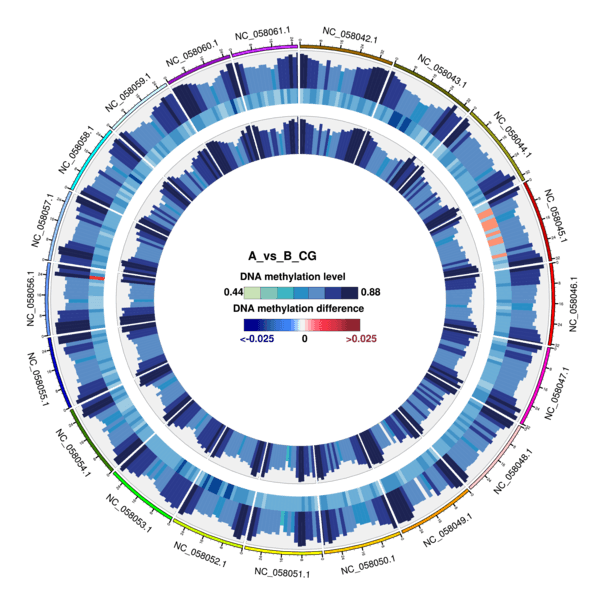
Group Comparison

Visualise methylation patterns across chromosomes to support single-sample methylome assessment and exploratory analysis.

Image
Image
1/1
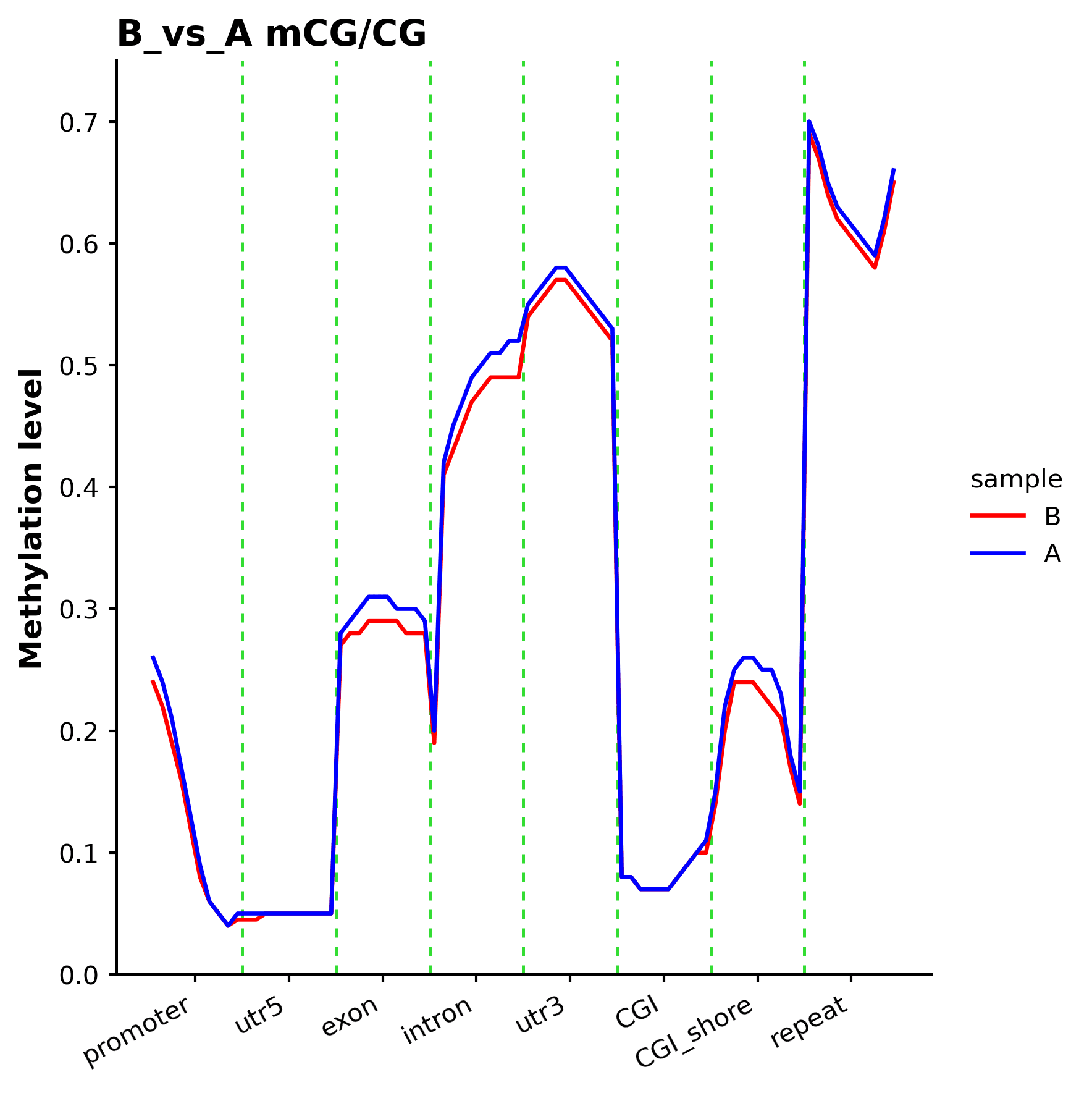
RRBS Region Profile

Assess methylation patterns across gene-related regions, helping to interpret regional methylation trends in CpG-rich areas.

Image
Image
1/1
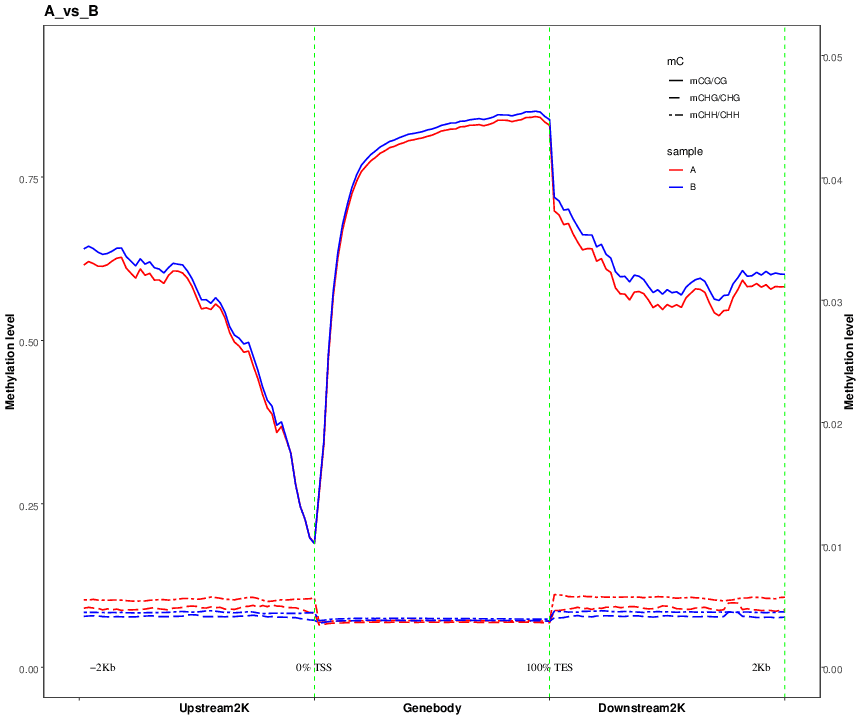
DMR Profile

Explore methylation changes around genes associated with differentially methylated regions to support comparative analysis between groups.

Image
Image
1/1
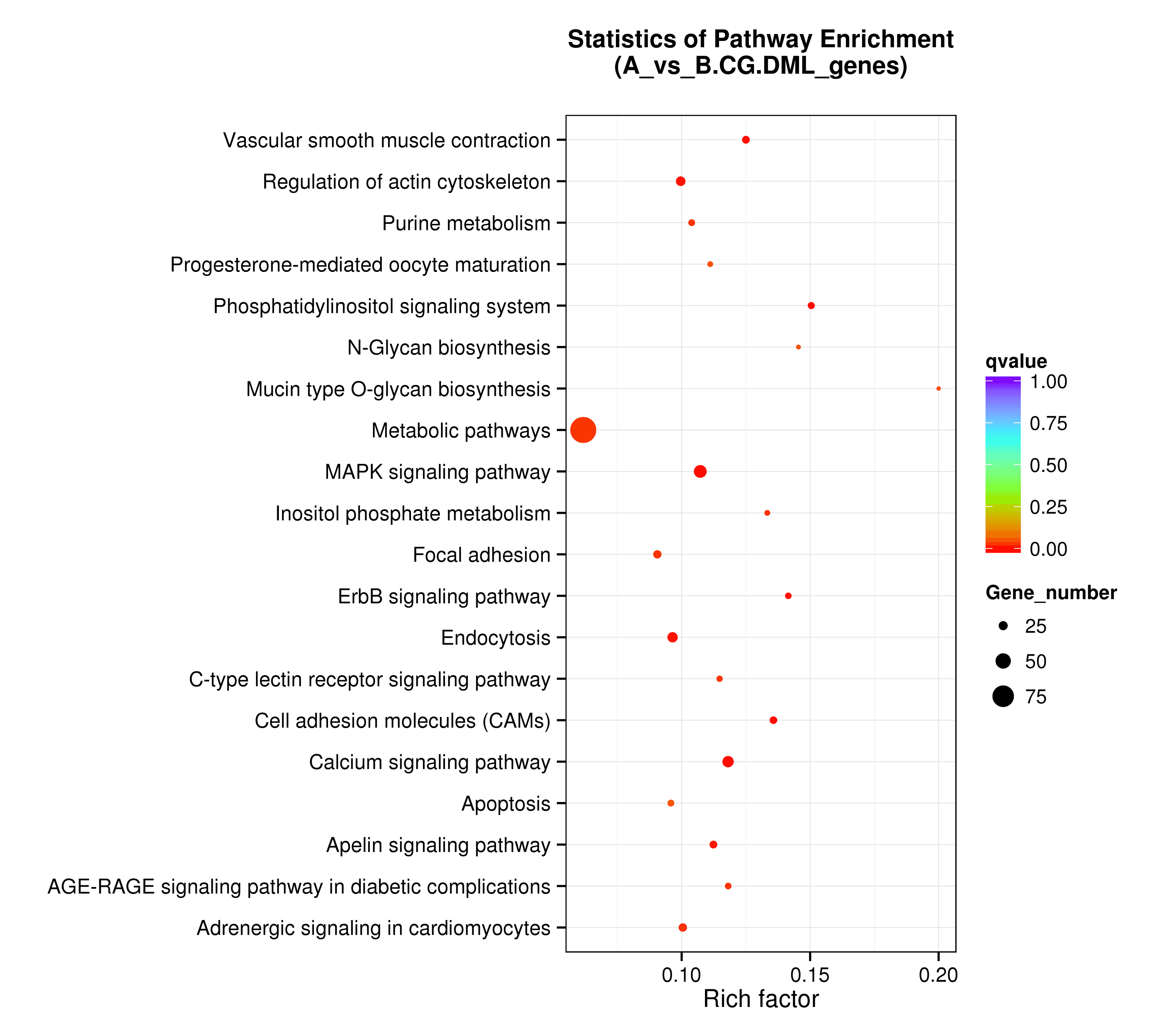
KEGG Enrichment

Identify enriched pathways and biological functions linked to genes associated with differentially methylated regions.

Image
Image
1/1
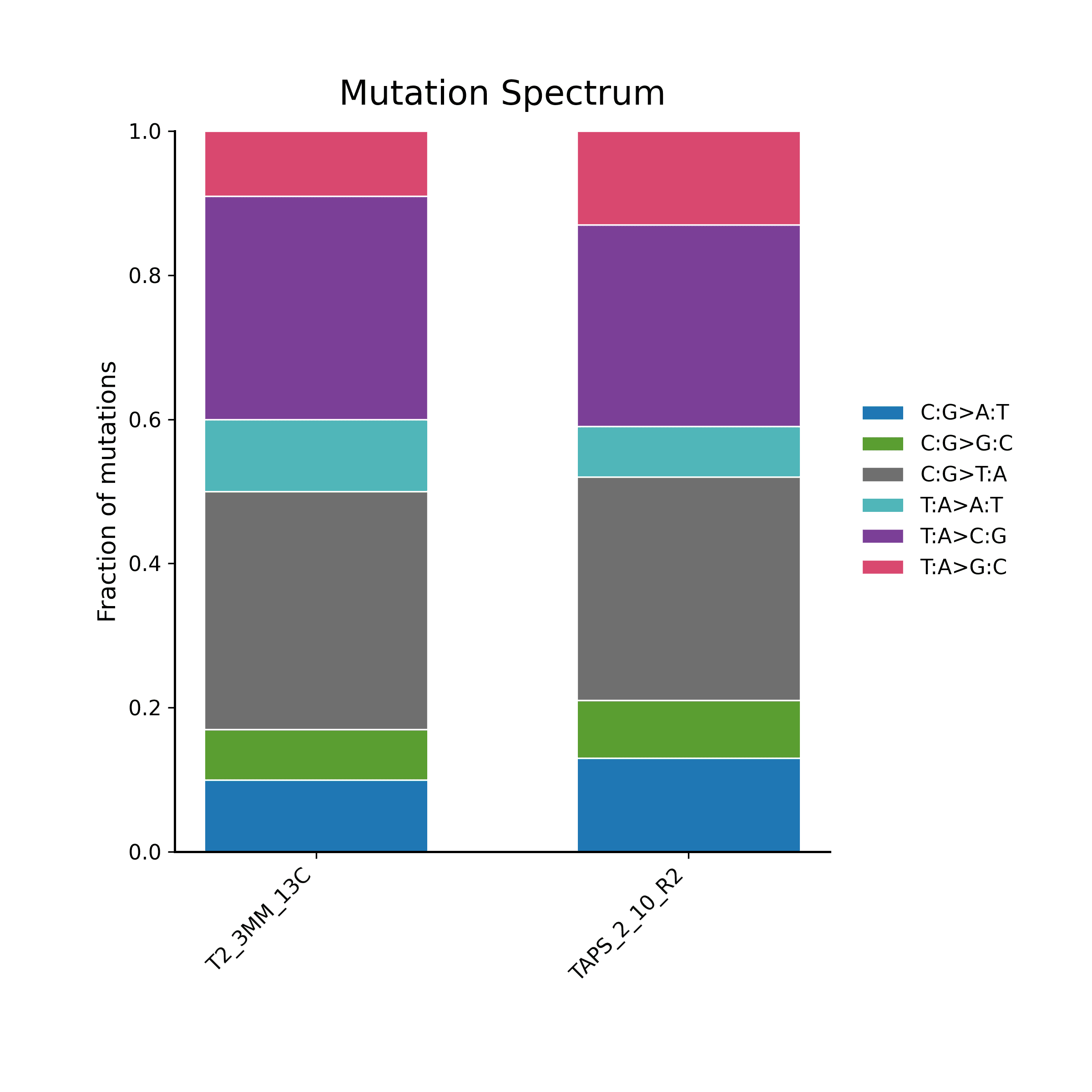
Variant Profile

For compatible workflows, selected outputs may support integrated interpretation of methylation patterns together with genomic variation.

Image
Image
1/1
Genome-wide Profile

Visualise genome-wide methylation patterns across chromosomes to support single-sample methylome assessment and exploratory analysis.

Image
Image
1/1
Group Comparison

Visualise methylation patterns across chromosomes to support single-sample methylome assessment and exploratory analysis.

Image
Image
1/1
RRBS Region Profile

Assess methylation patterns across gene-related regions, helping to interpret regional methylation trends in CpG-rich areas.

Image
Image
1/1
DMR Profile

Explore methylation changes around genes associated with differentially methylated regions to support comparative analysis between groups.

Image
Image
1/1
KEGG Enrichment

Identify enriched pathways and biological functions linked to genes associated with differentially methylated regions.

Image
Image
1/1
Variant Profile

For compatible workflows, selected outputs may support integrated interpretation of methylation patterns together with genomic variation.

Example Analysis Output

Image
Image
1/1
Genome-wide Profile

Visualise genome-wide methylation patterns across chromosomes to support single-sample methylome assessment and exploratory analysis.

Image
Image
1/1
Group Comparison

Visualise methylation patterns across chromosomes to support single-sample methylome assessment and exploratory analysis.

Image
Image
1/1
RRBS Region Profile

Assess methylation patterns across gene-related regions, helping to interpret regional methylation trends in CpG-rich areas.

Image
Image
1/1
DMR Profile

Explore methylation changes around genes associated with differentially methylated regions to support comparative analysis between groups.

Image
Image
1/1
KEGG Enrichment

Identify enriched pathways and biological functions linked to genes associated with differentially methylated regions.

Image
Image
1/1
Variant Profile

For compatible workflows, selected outputs may support integrated interpretation of methylation patterns together with genomic variation.

Image
Image
1/1
Genome-wide Profile

Visualise genome-wide methylation patterns across chromosomes to support single-sample methylome assessment and exploratory analysis.

Image
Image
1/1
Group Comparison

Visualise methylation patterns across chromosomes to support single-sample methylome assessment and exploratory analysis.

Image
Image
1/1
RRBS Region Profile

Assess methylation patterns across gene-related regions, helping to interpret regional methylation trends in CpG-rich areas.

Image
Image
1/1
DMR Profile

Explore methylation changes around genes associated with differentially methylated regions to support comparative analysis between groups.

Image
Image
1/1
KEGG Enrichment

Identify enriched pathways and biological functions linked to genes associated with differentially methylated regions.

Image
Image
1/1
Variant Profile

For compatible workflows, selected outputs may support integrated interpretation of methylation patterns together with genomic variation.

Webinars

Epigenetics Elevated: NGS Solutions for Transformative Epigenetics Research

Explore the latest NGS-based approaches for epigenetics research, including WGBS, EM-seq, ChIP-seq, RIP-seq, and ATAC-seq. This webinar will cover the principles, applications, workflows, and bioinformatics strategies used to investigate DNA methylation, chromatin accessibility, and gene regulation.

Learn More
(Epigenetics Elevated: NGS Solutions for Transformative Epigenetics Research)
Epigenetics Elevated: NGS Solutions for Transformative Epigenetics Research

Explore the latest NGS-based approaches for epigenetics research, including WGBS, EM-seq, ChIP-seq, RIP-seq, and ATAC-seq. This webinar will cover the principles, applications, workflows, and bioinformatics strategies used to investigate DNA methylation, chromatin accessibility, and gene regulation.

Learn More
(Epigenetics Elevated: NGS Solutions for Transformative Epigenetics Research)
Epigenetics Elevated: NGS Solutions for Transformative Epigenetics Research

Explore the latest NGS-based approaches for epigenetics research, including WGBS, EM-seq, ChIP-seq, RIP-seq, and ATAC-seq. This webinar will cover the principles, applications, workflows, and bioinformatics strategies used to investigate DNA methylation, chromatin accessibility, and gene regulation.

Learn More
(Epigenetics Elevated: NGS Solutions for Transformative Epigenetics Research)
Epigenetics Elevated: NGS Solutions for Transformative Epigenetics Research

Explore the latest NGS-based approaches for epigenetics research, including WGBS, EM-seq, ChIP-seq, RIP-seq, and ATAC-seq. This webinar will cover the principles, applications, workflows, and bioinformatics strategies used to investigate DNA methylation, chromatin accessibility, and gene regulation.

Learn More
(Epigenetics Elevated: NGS Solutions for Transformative Epigenetics Research)

Discuss Your DNA Methylation Project

Planning a methylation sequencing study? Novogene Europe can help you review sample requirements and select a suitable workflow based on your sample type, research question and analysis goals.
Contact Us
(Discuss Your DNA Methylation Project)
Contact Us
(Discuss Your DNA Methylation Project)
Privacy PolicyCookie PolicyTerms
banner laptop bg
banner mobile bg

DNA Methylation Sequencing

Genome-wide, targeted and advanced methylation sequencing solutions to support epigenomics, disease research and multiomics studies

DNA methylation is one of the most widely studied epigenetic marks and plays an important role in gene regulation, development, disease progression and environmental response. By adding regulatory context to genomic information, methylation analysis can help researchers understand why the same DNA sequence may lead to different biological outcomes across cell types, tissues or conditions.


Novogene Europe provides a range of DNA methylation sequencing services to support genome-wide, targeted and advanced methylation analysis. Our portfolio includes established bisulfite-based methods, enzyme-based methylation sequencing and newer approaches designed to preserve sequence complexity while supporting high-resolution 5mC analysis.

WGBSWGBS
RRBSRRBS
Enzyme Methyl-seqEnzyme Methyl-seq
TAPS+TAPS+
5-base Sequencing5-base Sequencing
ResourcesResources

Whole Genome Bisulfite Sequencing

Comprehensive genome-wide methylation profiling


Whole Genome Bisulfite Sequencing (WGBS) is an established approach for analysing DNA methylation across the genome at single-base resolution. By using bisulfite conversion, WGBS enables researchers to profile methylation patterns without prior selection of target regions, making it suitable for methylome-wide discovery studies.


WGBS can support the identification of differentially methylated regions, comparison of methylation profiles between samples or study groups, and integration with gene expression or other omics datasets. It is commonly used in epigenomics, developmental biology, cancer research, plant and animal studies, and environmental response research.

View Sample Requirements
Preview

Comprehensive genome-wide methylation profiling


Whole Genome Bisulfite Sequencing (WGBS) is an established approach for analysing DNA methylation across the genome at single-base resolution. By using bisulfite conversion, WGBS enables researchers to profile methylation patterns without prior selection of target regions, making it suitable for methylome-wide discovery studies.


WGBS can support the identification of differentially methylated regions, comparison of methylation profiles between samples or study groups, and integration with gene expression or other omics datasets. It is commonly used in epigenomics, developmental biology, cancer research, plant and animal studies, and environmental response research.

View Sample Requirements
Preview

Whole Genome Bisulfite Sequencing

Comprehensive genome-wide methylation profiling


Whole Genome Bisulfite Sequencing (WGBS) is an established approach for analysing DNA methylation across the genome at single-base resolution. By using bisulfite conversion, WGBS enables researchers to profile methylation patterns without prior selection of target regions, making it suitable for methylome-wide discovery studies.


WGBS can support the identification of differentially methylated regions, comparison of methylation profiles between samples or study groups, and integration with gene expression or other omics datasets. It is commonly used in epigenomics, developmental biology, cancer research, plant and animal studies, and environmental response research.

View Sample Requirements
Preview

Comprehensive genome-wide methylation profiling


Whole Genome Bisulfite Sequencing (WGBS) is an established approach for analysing DNA methylation across the genome at single-base resolution. By using bisulfite conversion, WGBS enables researchers to profile methylation patterns without prior selection of target regions, making it suitable for methylome-wide discovery studies.


WGBS can support the identification of differentially methylated regions, comparison of methylation profiles between samples or study groups, and integration with gene expression or other omics datasets. It is commonly used in epigenomics, developmental biology, cancer research, plant and animal studies, and environmental response research.

View Sample Requirements
Preview

Reduced Representation Bisulfite Sequencing

Cost-effective methylation profiling in CpG-rich regions


Reduced Representation Bisulfite Sequencing (RRBS) focuses sequencing coverage on CpG-rich regions of the genome, including promoters, CpG islands and other regulatory regions. By reducing the portion of the genome being sequenced, RRBS provides a practical option for projects where targeted methylation information is sufficient.


RRBS is suitable for comparative methylation studies, biomarker research, disease mechanism investigation and projects involving larger sample numbers where whole-genome methylation sequencing may not be required. It can help researchers examine methylation changes in functionally relevant genomic regions while managing sequencing depth and project scale.

View Sample Requirements
Preview

Cost-effective methylation profiling in CpG-rich regions


Reduced Representation Bisulfite Sequencing (RRBS) focuses sequencing coverage on CpG-rich regions of the genome, including promoters, CpG islands and other regulatory regions. By reducing the portion of the genome being sequenced, RRBS provides a practical option for projects where targeted methylation information is sufficient.


RRBS is suitable for comparative methylation studies, biomarker research, disease mechanism investigation and projects involving larger sample numbers where whole-genome methylation sequencing may not be required. It can help researchers examine methylation changes in functionally relevant genomic regions while managing sequencing depth and project scale.

View Sample Requirements
Preview

Reduced Representation Bisulfite Sequencing

Cost-effective methylation profiling in CpG-rich regions


Reduced Representation Bisulfite Sequencing (RRBS) focuses sequencing coverage on CpG-rich regions of the genome, including promoters, CpG islands and other regulatory regions. By reducing the portion of the genome being sequenced, RRBS provides a practical option for projects where targeted methylation information is sufficient.


RRBS is suitable for comparative methylation studies, biomarker research, disease mechanism investigation and projects involving larger sample numbers where whole-genome methylation sequencing may not be required. It can help researchers examine methylation changes in functionally relevant genomic regions while managing sequencing depth and project scale.

View Sample Requirements
Preview

Cost-effective methylation profiling in CpG-rich regions


Reduced Representation Bisulfite Sequencing (RRBS) focuses sequencing coverage on CpG-rich regions of the genome, including promoters, CpG islands and other regulatory regions. By reducing the portion of the genome being sequenced, RRBS provides a practical option for projects where targeted methylation information is sufficient.


RRBS is suitable for comparative methylation studies, biomarker research, disease mechanism investigation and projects involving larger sample numbers where whole-genome methylation sequencing may not be required. It can help researchers examine methylation changes in functionally relevant genomic regions while managing sequencing depth and project scale.

View Sample Requirements
Preview

Enzymatic Methylation Sequencing

Enzyme-based, bisulfite-free genome-wide methylation analysis


Enzyme-based methylation sequencing provides a bisulfite-free approach for genome-wide DNA methylation analysis. Instead of harsh chemical conversion, this workflow uses enzymatic conversion chemistry to distinguish methylated and unmethylated cytosines while helping to preserve DNA integrity and library complexity.


This approach may be useful for studies where DNA quality, input amount or sample value is an important consideration. It supports methylation pattern discovery, differentially methylated region analysis and comparative methylome studies, while offering an alternative genome-wide workflow for researchers looking beyond conventional bisulfite-based methods.

View Sample Requirements
Preview

Enzyme-based, bisulfite-free genome-wide methylation analysis


Enzyme-based methylation sequencing provides a bisulfite-free approach for genome-wide DNA methylation analysis. Instead of harsh chemical conversion, this workflow uses enzymatic conversion chemistry to distinguish methylated and unmethylated cytosines while helping to preserve DNA integrity and library complexity.


This approach may be useful for studies where DNA quality, input amount or sample value is an important consideration. It supports methylation pattern discovery, differentially methylated region analysis and comparative methylome studies, while offering an alternative genome-wide workflow for researchers looking beyond conventional bisulfite-based methods.

View Sample Requirements
Preview

Enzymatic Methylation Sequencing

Enzyme-based, bisulfite-free genome-wide methylation analysis


Enzyme-based methylation sequencing provides a bisulfite-free approach for genome-wide DNA methylation analysis. Instead of harsh chemical conversion, this workflow uses enzymatic conversion chemistry to distinguish methylated and unmethylated cytosines while helping to preserve DNA integrity and library complexity.


This approach may be useful for studies where DNA quality, input amount or sample value is an important consideration. It supports methylation pattern discovery, differentially methylated region analysis and comparative methylome studies, while offering an alternative genome-wide workflow for researchers looking beyond conventional bisulfite-based methods.

View Sample Requirements
Preview

Enzyme-based, bisulfite-free genome-wide methylation analysis


Enzyme-based methylation sequencing provides a bisulfite-free approach for genome-wide DNA methylation analysis. Instead of harsh chemical conversion, this workflow uses enzymatic conversion chemistry to distinguish methylated and unmethylated cytosines while helping to preserve DNA integrity and library complexity.


This approach may be useful for studies where DNA quality, input amount or sample value is an important consideration. It supports methylation pattern discovery, differentially methylated region analysis and comparative methylome studies, while offering an alternative genome-wide workflow for researchers looking beyond conventional bisulfite-based methods.

View Sample Requirements
Preview

TAPS+ Sequencing

Preserved-complexity methylation sequencing for integrated methylome and genomic analysis


TAPS+ Sequencing provides a preserved-complexity approach to DNA methylation analysis. Instead of converting a large proportion of cytosines, TAPS+ targets methylated cytosines while leaving much of the original DNA sequence unchanged, helping to maintain sequence complexity and support improved mapping performance.


This approach can be useful for projects where methylation analysis needs to be combined with broader genomic interpretation. TAPS+ supports high-resolution methylation profiling and may be considered for studies involving complex biology, fragmented or challenging samples, translational research, oncology studies and biomarker discovery.

View Sample Requirements
Preview

Preserved-complexity methylation sequencing for integrated methylome and genomic analysis


TAPS+ Sequencing provides a preserved-complexity approach to DNA methylation analysis. Instead of converting a large proportion of cytosines, TAPS+ targets methylated cytosines while leaving much of the original DNA sequence unchanged, helping to maintain sequence complexity and support improved mapping performance.


This approach can be useful for projects where methylation analysis needs to be combined with broader genomic interpretation. TAPS+ supports high-resolution methylation profiling and may be considered for studies involving complex biology, fragmented or challenging samples, translational research, oncology studies and biomarker discovery.

View Sample Requirements
Preview

TAPS+ Sequencing

Preserved-complexity methylation sequencing for integrated methylome and genomic analysis


TAPS+ Sequencing provides a preserved-complexity approach to DNA methylation analysis. Instead of converting a large proportion of cytosines, TAPS+ targets methylated cytosines while leaving much of the original DNA sequence unchanged, helping to maintain sequence complexity and support improved mapping performance.


This approach can be useful for projects where methylation analysis needs to be combined with broader genomic interpretation. TAPS+ supports high-resolution methylation profiling and may be considered for studies involving complex biology, fragmented or challenging samples, translational research, oncology studies and biomarker discovery.

View Sample Requirements
Preview

Preserved-complexity methylation sequencing for integrated methylome and genomic analysis


TAPS+ Sequencing provides a preserved-complexity approach to DNA methylation analysis. Instead of converting a large proportion of cytosines, TAPS+ targets methylated cytosines while leaving much of the original DNA sequence unchanged, helping to maintain sequence complexity and support improved mapping performance.


This approach can be useful for projects where methylation analysis needs to be combined with broader genomic interpretation. TAPS+ supports high-resolution methylation profiling and may be considered for studies involving complex biology, fragmented or challenging samples, translational research, oncology studies and biomarker discovery.

View Sample Requirements
Preview

5-base Sequencing

Focused 5mC and genomic analysis from a single sequencing workflow


5-base Sequencing is designed to detect the four standard DNA bases together with 5-methylcytosine (5mC) in a single sequencing workflow. By focusing on 5mC conversion while preserving much of the original genome sequence, it supports methylation profiling alongside variant-aware genomic analysis from the same sample.


This service may be suitable for studies where researchers want to investigate methylation patterns and genetic variation together, including cancer research, rare disease research, biomarker studies and cohort-scale projects. It provides a practical option for projects requiring a focused 5mC signal and variant-aware interpretation.

View Sample Requirements
Preview

Focused 5mC and genomic analysis from a single sequencing workflow


5-base Sequencing is designed to detect the four standard DNA bases together with 5-methylcytosine (5mC) in a single sequencing workflow. By focusing on 5mC conversion while preserving much of the original genome sequence, it supports methylation profiling alongside variant-aware genomic analysis from the same sample.


This service may be suitable for studies where researchers want to investigate methylation patterns and genetic variation together, including cancer research, rare disease research, biomarker studies and cohort-scale projects. It provides a practical option for projects requiring a focused 5mC signal and variant-aware interpretation.

View Sample Requirements
Preview

5-base Sequencing

Focused 5mC and genomic analysis from a single sequencing workflow


5-base Sequencing is designed to detect the four standard DNA bases together with 5-methylcytosine (5mC) in a single sequencing workflow. By focusing on 5mC conversion while preserving much of the original genome sequence, it supports methylation profiling alongside variant-aware genomic analysis from the same sample.


This service may be suitable for studies where researchers want to investigate methylation patterns and genetic variation together, including cancer research, rare disease research, biomarker studies and cohort-scale projects. It provides a practical option for projects requiring a focused 5mC signal and variant-aware interpretation.

View Sample Requirements
Preview

Focused 5mC and genomic analysis from a single sequencing workflow


5-base Sequencing is designed to detect the four standard DNA bases together with 5-methylcytosine (5mC) in a single sequencing workflow. By focusing on 5mC conversion while preserving much of the original genome sequence, it supports methylation profiling alongside variant-aware genomic analysis from the same sample.


This service may be suitable for studies where researchers want to investigate methylation patterns and genetic variation together, including cancer research, rare disease research, biomarker studies and cohort-scale projects. It provides a practical option for projects requiring a focused 5mC signal and variant-aware interpretation.

View Sample Requirements
Preview

Example Analysis Output

Image
Image
1/1
Genome-wide Profile

Visualise genome-wide methylation patterns across chromosomes to support single-sample methylome assessment and exploratory analysis.

Image
Image
1/1
Group Comparison

Visualise methylation patterns across chromosomes to support single-sample methylome assessment and exploratory analysis.

Image
Image
1/1
RRBS Region Profile

Assess methylation patterns across gene-related regions, helping to interpret regional methylation trends in CpG-rich areas.

Image
Image
1/1
DMR Profile

Explore methylation changes around genes associated with differentially methylated regions to support comparative analysis between groups.

Image
Image
1/1
KEGG Enrichment

Identify enriched pathways and biological functions linked to genes associated with differentially methylated regions.

Image
Image
1/1
Variant Profile

For compatible workflows, selected outputs may support integrated interpretation of methylation patterns together with genomic variation.

Image
Image
1/1
Genome-wide Profile

Visualise genome-wide methylation patterns across chromosomes to support single-sample methylome assessment and exploratory analysis.

Image
Image
1/1
Group Comparison

Visualise methylation patterns across chromosomes to support single-sample methylome assessment and exploratory analysis.

Image
Image
1/1
RRBS Region Profile

Assess methylation patterns across gene-related regions, helping to interpret regional methylation trends in CpG-rich areas.

Image
Image
1/1
DMR Profile

Explore methylation changes around genes associated with differentially methylated regions to support comparative analysis between groups.

Image
Image
1/1
KEGG Enrichment

Identify enriched pathways and biological functions linked to genes associated with differentially methylated regions.

Image
Image
1/1
Variant Profile

For compatible workflows, selected outputs may support integrated interpretation of methylation patterns together with genomic variation.

Example Analysis Output

Image
Image
1/1
Genome-wide Profile

Visualise genome-wide methylation patterns across chromosomes to support single-sample methylome assessment and exploratory analysis.

Image
Image
1/1
Group Comparison

Visualise methylation patterns across chromosomes to support single-sample methylome assessment and exploratory analysis.

Image
Image
1/1
RRBS Region Profile

Assess methylation patterns across gene-related regions, helping to interpret regional methylation trends in CpG-rich areas.

Image
Image
1/1
DMR Profile

Explore methylation changes around genes associated with differentially methylated regions to support comparative analysis between groups.

Image
Image
1/1
KEGG Enrichment

Identify enriched pathways and biological functions linked to genes associated with differentially methylated regions.

Image
Image
1/1
Variant Profile

For compatible workflows, selected outputs may support integrated interpretation of methylation patterns together with genomic variation.

Image
Image
1/1
Genome-wide Profile

Visualise genome-wide methylation patterns across chromosomes to support single-sample methylome assessment and exploratory analysis.

Image
Image
1/1
Group Comparison

Visualise methylation patterns across chromosomes to support single-sample methylome assessment and exploratory analysis.

Image
Image
1/1
RRBS Region Profile

Assess methylation patterns across gene-related regions, helping to interpret regional methylation trends in CpG-rich areas.

Image
Image
1/1
DMR Profile

Explore methylation changes around genes associated with differentially methylated regions to support comparative analysis between groups.

Image
Image
1/1
KEGG Enrichment

Identify enriched pathways and biological functions linked to genes associated with differentially methylated regions.

Image
Image
1/1
Variant Profile

For compatible workflows, selected outputs may support integrated interpretation of methylation patterns together with genomic variation.

Webinars

Epigenetics Elevated: NGS Solutions for Transformative Epigenetics Research

Explore the latest NGS-based approaches for epigenetics research, including WGBS, EM-seq, ChIP-seq, RIP-seq, and ATAC-seq. This webinar will cover the principles, applications, workflows, and bioinformatics strategies used to investigate DNA methylation, chromatin accessibility, and gene regulation.

Learn More
(Epigenetics Elevated: NGS Solutions for Transformative Epigenetics Research)
Epigenetics Elevated: NGS Solutions for Transformative Epigenetics Research

Explore the latest NGS-based approaches for epigenetics research, including WGBS, EM-seq, ChIP-seq, RIP-seq, and ATAC-seq. This webinar will cover the principles, applications, workflows, and bioinformatics strategies used to investigate DNA methylation, chromatin accessibility, and gene regulation.

Learn More
(Epigenetics Elevated: NGS Solutions for Transformative Epigenetics Research)
Epigenetics Elevated: NGS Solutions for Transformative Epigenetics Research

Explore the latest NGS-based approaches for epigenetics research, including WGBS, EM-seq, ChIP-seq, RIP-seq, and ATAC-seq. This webinar will cover the principles, applications, workflows, and bioinformatics strategies used to investigate DNA methylation, chromatin accessibility, and gene regulation.

Learn More
(Epigenetics Elevated: NGS Solutions for Transformative Epigenetics Research)
Epigenetics Elevated: NGS Solutions for Transformative Epigenetics Research

Explore the latest NGS-based approaches for epigenetics research, including WGBS, EM-seq, ChIP-seq, RIP-seq, and ATAC-seq. This webinar will cover the principles, applications, workflows, and bioinformatics strategies used to investigate DNA methylation, chromatin accessibility, and gene regulation.

Learn More
(Epigenetics Elevated: NGS Solutions for Transformative Epigenetics Research)

Discuss Your DNA Methylation Project

Planning a methylation sequencing study? Novogene Europe can help you review sample requirements and select a suitable workflow based on your sample type, research question and analysis goals.
Contact Us
(Discuss Your DNA Methylation Project)
Contact Us
(Discuss Your DNA Methylation Project)
Privacy PolicyCookie PolicyTerms