
• Cart
    • Quote
    • Enquiry
    • Cart
    • Quote
    • Enquiry
Novogene Europe
  • Novogene Europe
  • Genomics
    • Human Whole Genome Sequencing
    • Whole Exome Sequencing
    • Plant and Animal Whole Genome Sequencing
    • Plant and Animal De novo Sequencing
    • Microbial Whole Genome Sequencing
    • Microbial De novo Sequencing
    • Whole Plasmid SequencingOrder Online!
    Proteomics
    • Olink ProteomicsNew!
    Epigenomics
    • DNA Methylation SequencingUpdated!
    • Chromatin Immunoprecipitation Sequencing (ChIP-seq)
    • RNA Immunoprecipitation Sequencing (RIP-seq)
    Metabolomics
    • Untargeted MetabolomicsNew!
    Transcriptomics
    • mRNA Sequencing
    • Small RNA Sequencing (sRNA‑seq)
    • Circular RNA Sequencing (circRNA-seq)
    • Total RNA Sequencing
    • Whole Transcriptome Sequencing
    • Full-Length Transcriptome Sequencing
    • Prokaryotic RNA Sequencing
    • Metatranscriptome Sequencing
    Metagenomics
    • Amplicon SequencingOrder Online!
    • Shotgun Metagenomics Sequencing
    Single Cell & Spatial Omics
    • 10x Single Cell Gene Expression
    • 10x Single Cell Immune Profiling
    • 10x Visium HD Spatial Gene Expression
    Premade Library
    • Sequencing Only on Illumina® Sequencer
    • Sequencing Only on Element SequencerNew!
    • Sequencing Only on PacBio Sequencer
    Translational Research
    • Accredited & Validated Clinical Research Sequencing
  • PromotionsPromotions
    • Platforms
    • Automated Delivery Platform (Falcon)
    • Bioinformatics Analysis Tool (NovoMagic)
    • Customer Service System (CSS)
    • Customer Support
    • Webinars
    • Case Study
    • Blog
    • Brochure
    • Cancer Research
    • Immuno-oncology
    • Agrigenomics
    • Environment
    • Food Science
    • Human Microbiome
    • Plant and Animal Microbiome
    • Drug Discovery and Development
    • Rare and Complex Diseases
    • About Us
    • News & Events
    • Careers
    • Our Locations
  • Contact UsContact Us
    • Amplicon Sequencing
    • Whole Plasmid Sequencing
  1. Home
  2. Resources
  3. Blog
  4. Beyond Gene Expression: Where Long-Read RNA Sequencing Adds Value

Beyond Gene Expression: Where Long-Read RNA Sequencing Adds Value

Why transcript-level changes matter

Measuring gene expression has transformed our understanding of how cells respond to development, disease and environmental change. However, knowing how much of a gene is expressed does not necessarily reveal which forms of its transcript are present.

A single gene can produce multiple transcript isoforms through alternative transcription initiation, splicing and polyadenylation. These isoforms can differ in coding potential, stability, localisation and biological function.[1] Importantly, biologically relevant change does not always involve a change in overall gene expression. A gene may be expressed at a similar level in two conditions while the relative abundance of its isoforms shifts substantially — an isoform switch that gene-level analysis alone would not detect.

In a 2026 study of activated human monocytes, native long-read RNA sequencing revealed widespread isoform switching and thousands of previously unannotated transcript variants, including changes associated with altered coding potential and differences at the protein level.[2]

Understanding the transcriptome therefore means asking not only how much of a gene is expressed, but which transcript forms are present.

What long-read RNA sequencing can reveal

Short-read RNA sequencing remains a powerful approach for measuring gene expression and investigating transcriptomes. However, resolving complete transcript structures from short fragments can be challenging, particularly for genes containing many exons or multiple closely related isoforms. Individual splice junctions can be detected, but computational reconstruction is often required to determine which exons, splice sites and transcript boundaries belong to the same RNA molecule.

Long reads approach this differently by spanning much or all of an individual transcript, providing more direct information about how these features are connected.[1]

This additional information is particularly valuable when the biological question concerns isoform switching, complex or novel transcripts, or alternative transcript start and end sites. Alternative splicing generates structurally distinct transcripts through several mechanisms:

  • Exon skipping — an exon present in one isoform is absent from another.
  • Alternative 5′ or 3′ splice-site selection — the same exon is truncated or extended.
  • Mutually exclusive exons — one of two exons is retained, but never both.
  • Intron retention — an intron remains within the mature transcript.

Long reads show which of these events occur together within an individual transcript, rather than only that each occurs somewhere within a gene. This distinction becomes important where a gene contains more than one variable region, because the same set of splice junctions can then be consistent with more than one combination of transcripts (Figure 1). This can help distinguish closely related isoforms and identify changes in transcript usage between biological conditions. Recent benchmarking has also shown that the analytical method used to define transcripts can influence the resulting isoform catalogue.[3]
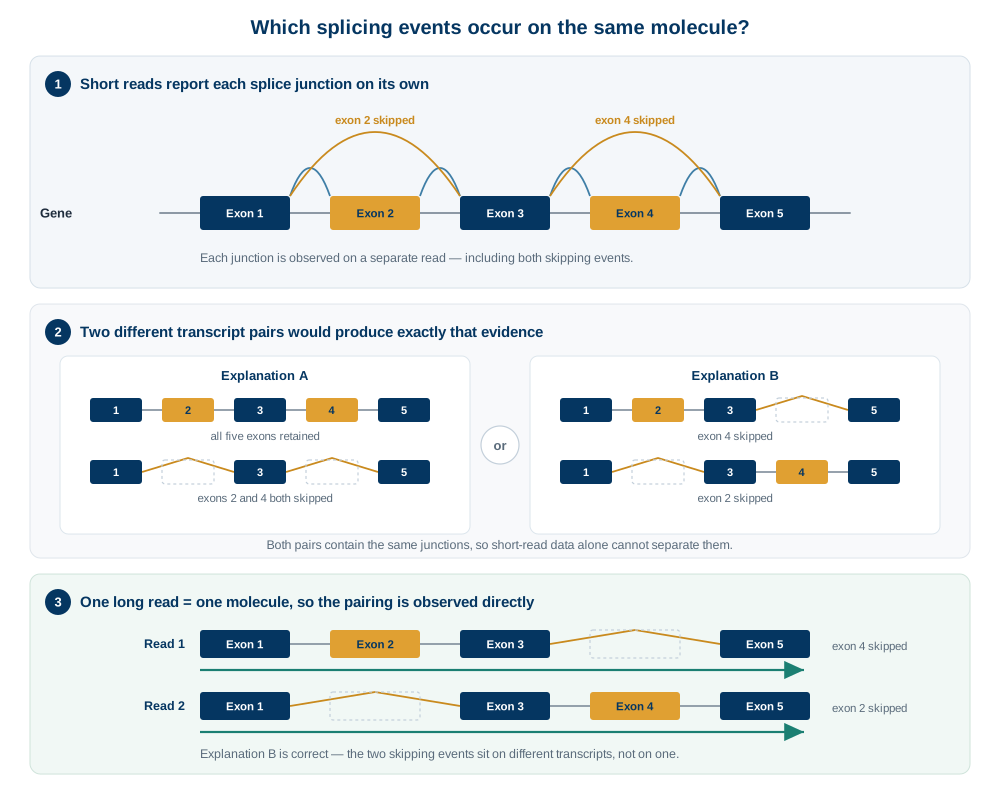
Figure 1. Why some transcript-level questions require long reads. Using exon skipping as an example: short-read data reports each splice junction independently (1). Where a gene contains more than one skipping event, different combinations of transcripts can generate an identical set of junctions, and short reads alone cannot distinguish between them (2). A long read covers a single molecule, showing which splicing events occur together on the same transcript (3).

The same molecule-level information can support related questions. Integrating long-read transcript and genetic data has been used to distinguish cis- and trans-directed alternative splicing,[4] while full-length transcript information can help build or refine annotations where existing references are incomplete, particularly in non-model organisms.[1,5]

Designing the study

Once transcript-level resolution is needed, the next questions are which RNA population the study needs to capture, and whether the work is discovery-led, quantitative or both.

Poly(A)-based full-length transcriptome workflows focus on polyadenylated transcripts and are appropriate for many mRNA-focused studies. Where the biological question extends to non-polyadenylated RNA, a different or complementary library strategy, such as a total RNA approach, may be needed. RNA quality and integrity are also important because full-length transcript characterisation depends on preserving transcript molecules.

Recent high-throughput PacBio Kinnex workflows can support transcript-level quantification alongside structural analysis, so long-read RNA sequencing should not automatically be treated as a discovery-only approach.[6]

Short- and long-read RNA sequencing can also be combined when they answer complementary questions — for example, pairing detailed transcript and isoform resolution in selected samples with expression profiling across a larger cohort.[1,5]

The appropriate strategy should therefore reflect the RNA population of interest, sample characteristics and the level of transcript information required.

Matching the workflow to the research question

Once these requirements are defined, platform and analysis choices can follow.

  • PacBio Iso-Seq with Kinnex supports high-accuracy full-length transcript sequencing at increased throughput, enabling isoform identification, transcript annotation and novel transcript discovery.[6,7]
  • Oxford Nanopore sequencing supports full-length cDNA and direct RNA sequencing, enabling transcript structure and isoform analysis with the option to sequence native RNA directly.[8]

Analysis choice follows the same logic. Isoform characterisation, novel transcript identification, alternative splicing analysis and transcript-level expression each address different questions, and the appropriate combination depends on the study objective.

Novogene Europe supports poly(A)-based full-length transcriptome sequencing using both PacBio and Oxford Nanopore platforms, with downstream analysis selected according to the research question.[9] Projects requiring alternative library strategies or workflows outside the standard service offering, including direct RNA sequencing, can also be discussed and scoped individually.

Ultimately, where long-read RNA sequencing adds value depends on what the study needs to understand about the transcriptome. When gene-level expression is sufficient, additional transcript-level resolution may not be necessary. But when the biological question depends on distinguishing transcript forms, resolving their structure or understanding how transcript usage changes between conditions, long reads can reveal information that gene-level measurements alone may not capture.

Planning a transcriptomics study? Talk to the Novogene Europe team about the sequencing, library and analysis strategy best suited to your research question.

References
  1. Monzó C, Liu T, Conesa A. Transcriptomics in the era of long-read sequencing. Nature Reviews Genetics. 2025;26:681–701. https://www.nature.com/articles/s41576-025-00828-z
  2. Bodelón A, van Haaren MJH, Sobrevals Alcaraz P, et al. Native long-read RNA sequencing of human monocytes reveals activation-induced alternative splicing toward functional isoforms. Nature Communications. 2026;17:6982. https://www.nature.com/articles/s41467-026-73661-5
  3. Su Y, Yu Z, Jin S, et al. Comprehensive assessment of mRNA isoform detection methods for long-read sequencing data. Nature Communications. 2024;15:3972. https://www.nature.com/articles/s41467-024-48117-3
  4. Quinones-Valdez G, Amoah K, Xiao X. Long-read RNA-seq demarcates cis- and trans-directed alternative RNA splicing. Nature Communications. 2025;16:9603. https://www.nature.com/articles/s41467-025-64605-6
  5. Alfonso-Gonzalez C, Hilgers V. Elucidating the coordination of RNA processing using short-read and long-read RNA-sequencing methods. Nature Reviews Molecular Cell Biology. 2026;27:194–212. https://www.nature.com/articles/s41580-025-00895-4
  6. Wissel D, Mehlferber MM, Nguyen KM, et al. A systematic benchmark of high-accuracy PacBio long-read RNA sequencing for transcript-level quantification. Genome Biology. 2026;27:110. https://link.springer.com/article/10.1186/s13059-026-03988-1
  7. PacBio. Kinnex RNA Sequencing. https://www.pacb.com/technology/kinnex/
  8. Oxford Nanopore Technologies. RNA and cDNA Sequencing. https://nanoporetech.com/applications/techniques/rna-and-cdna-sequencing

ServicesServices menu

ResourcesResources menu

SupportSupport menu

CompanyCompany menu

Services
Human Whole Genome SequencingWhole Exome SequencingPlant and Animal Whole Genome SequencingPlant and Animal De novo SequencingDNA Methylation SequencingmRNA SequencingFull-Length Transcriptome SequencingWhole Transcriptome SequencingMetatranscriptome SequencingShotgun Metagenomics SequencingAmplicon SequencingWhole Plasmid Sequencing10X Single Cell Gene Expression10X Single Cell Immune Profiling10X Visium HD Spatial Gene ExpressionOlink ProteomicsUntargeted MetabolomicsAccredited & Validated Clinical Research Sequencing
Resources
WebinarsCase StudyBlogBrochure
Support
PlatformBioinformatics Analysis Tool (NovoMagic)Customer Service System (CSS)Customer Support
Company
About UsNews & EventsLocationContact Us
LinkedInLinkedIn hoverYouTubeYouTube hoverInstagramInstagram hoverXX hover
Copyright © 2026 Novogene Inc. All rights reserved.For Research Use Only. Not for Clinical Diagnostic Use.
    • Cart
    • Quote
    • Enquiry
    • Cart
    • Quote
    • Enquiry
Novogene Europe
  • Novogene Europe
  • Genomics
    • Human Whole Genome Sequencing
    • Whole Exome Sequencing
    • Plant and Animal Whole Genome Sequencing
    • Plant and Animal De novo Sequencing
    • Microbial Whole Genome Sequencing
    • Microbial De novo Sequencing
    • Whole Plasmid SequencingOrder Online!
    Proteomics
    • Olink ProteomicsNew!
    Epigenomics
    • DNA Methylation SequencingUpdated!
    • Chromatin Immunoprecipitation Sequencing (ChIP-seq)
    • RNA Immunoprecipitation Sequencing (RIP-seq)
    Metabolomics
    • Untargeted MetabolomicsNew!
    Transcriptomics
    • mRNA Sequencing
    • Small RNA Sequencing (sRNA‑seq)
    • Circular RNA Sequencing (circRNA-seq)
    • Total RNA Sequencing
    • Whole Transcriptome Sequencing
    • Full-Length Transcriptome Sequencing
    • Prokaryotic RNA Sequencing
    • Metatranscriptome Sequencing
    Metagenomics
    • Amplicon SequencingOrder Online!
    • Shotgun Metagenomics Sequencing
    Single Cell & Spatial Omics
    • 10x Single Cell Gene Expression
    • 10x Single Cell Immune Profiling
    • 10x Visium HD Spatial Gene Expression
    Premade Library
    • Sequencing Only on Illumina® Sequencer
    • Sequencing Only on Element SequencerNew!
    • Sequencing Only on PacBio Sequencer
    Translational Research
    • Accredited & Validated Clinical Research Sequencing
  • PromotionsPromotions
    • Platforms
    • Automated Delivery Platform (Falcon)
    • Bioinformatics Analysis Tool (NovoMagic)
    • Customer Service System (CSS)
    • Customer Support
    • Webinars
    • Case Study
    • Blog
    • Brochure
    • Cancer Research
    • Immuno-oncology
    • Agrigenomics
    • Environment
    • Food Science
    • Human Microbiome
    • Plant and Animal Microbiome
    • Drug Discovery and Development
    • Rare and Complex Diseases
    • About Us
    • News & Events
    • Careers
    • Our Locations
  • Contact UsContact Us
    • Amplicon Sequencing
    • Whole Plasmid Sequencing
  1. Home
  2. Resources
  3. Blog
  4. Beyond Gene Expression: Where Long-Read RNA Sequencing Adds Value

Beyond Gene Expression: Where Long-Read RNA Sequencing Adds Value

Why transcript-level changes matter

Measuring gene expression has transformed our understanding of how cells respond to development, disease and environmental change. However, knowing how much of a gene is expressed does not necessarily reveal which forms of its transcript are present.

A single gene can produce multiple transcript isoforms through alternative transcription initiation, splicing and polyadenylation. These isoforms can differ in coding potential, stability, localisation and biological function.[1] Importantly, biologically relevant change does not always involve a change in overall gene expression. A gene may be expressed at a similar level in two conditions while the relative abundance of its isoforms shifts substantially — an isoform switch that gene-level analysis alone would not detect.

In a 2026 study of activated human monocytes, native long-read RNA sequencing revealed widespread isoform switching and thousands of previously unannotated transcript variants, including changes associated with altered coding potential and differences at the protein level.[2]

Understanding the transcriptome therefore means asking not only how much of a gene is expressed, but which transcript forms are present.

What long-read RNA sequencing can reveal

Short-read RNA sequencing remains a powerful approach for measuring gene expression and investigating transcriptomes. However, resolving complete transcript structures from short fragments can be challenging, particularly for genes containing many exons or multiple closely related isoforms. Individual splice junctions can be detected, but computational reconstruction is often required to determine which exons, splice sites and transcript boundaries belong to the same RNA molecule.

Long reads approach this differently by spanning much or all of an individual transcript, providing more direct information about how these features are connected.[1]

This additional information is particularly valuable when the biological question concerns isoform switching, complex or novel transcripts, or alternative transcript start and end sites. Alternative splicing generates structurally distinct transcripts through several mechanisms:

  • Exon skipping — an exon present in one isoform is absent from another.
  • Alternative 5′ or 3′ splice-site selection — the same exon is truncated or extended.
  • Mutually exclusive exons — one of two exons is retained, but never both.
  • Intron retention — an intron remains within the mature transcript.

Long reads show which of these events occur together within an individual transcript, rather than only that each occurs somewhere within a gene. This distinction becomes important where a gene contains more than one variable region, because the same set of splice junctions can then be consistent with more than one combination of transcripts (Figure 1). This can help distinguish closely related isoforms and identify changes in transcript usage between biological conditions. Recent benchmarking has also shown that the analytical method used to define transcripts can influence the resulting isoform catalogue.[3]

Figure 1. Why some transcript-level questions require long reads. Using exon skipping as an example: short-read data reports each splice junction independently (1). Where a gene contains more than one skipping event, different combinations of transcripts can generate an identical set of junctions, and short reads alone cannot distinguish between them (2). A long read covers a single molecule, showing which splicing events occur together on the same transcript (3).

The same molecule-level information can support related questions. Integrating long-read transcript and genetic data has been used to distinguish cis- and trans-directed alternative splicing,[4] while full-length transcript information can help build or refine annotations where existing references are incomplete, particularly in non-model organisms.[1,5]

Designing the study

Once transcript-level resolution is needed, the next questions are which RNA population the study needs to capture, and whether the work is discovery-led, quantitative or both.

Poly(A)-based full-length transcriptome workflows focus on polyadenylated transcripts and are appropriate for many mRNA-focused studies. Where the biological question extends to non-polyadenylated RNA, a different or complementary library strategy, such as a total RNA approach, may be needed. RNA quality and integrity are also important because full-length transcript characterisation depends on preserving transcript molecules.

Recent high-throughput PacBio Kinnex workflows can support transcript-level quantification alongside structural analysis, so long-read RNA sequencing should not automatically be treated as a discovery-only approach.[6]

Short- and long-read RNA sequencing can also be combined when they answer complementary questions — for example, pairing detailed transcript and isoform resolution in selected samples with expression profiling across a larger cohort.[1,5]

The appropriate strategy should therefore reflect the RNA population of interest, sample characteristics and the level of transcript information required.

Matching the workflow to the research question

Once these requirements are defined, platform and analysis choices can follow.

  • PacBio Iso-Seq with Kinnex supports high-accuracy full-length transcript sequencing at increased throughput, enabling isoform identification, transcript annotation and novel transcript discovery.[6,7]
  • Oxford Nanopore sequencing supports full-length cDNA and direct RNA sequencing, enabling transcript structure and isoform analysis with the option to sequence native RNA directly.[8]

Analysis choice follows the same logic. Isoform characterisation, novel transcript identification, alternative splicing analysis and transcript-level expression each address different questions, and the appropriate combination depends on the study objective.

Novogene Europe supports poly(A)-based full-length transcriptome sequencing using both PacBio and Oxford Nanopore platforms, with downstream analysis selected according to the research question.[9] Projects requiring alternative library strategies or workflows outside the standard service offering, including direct RNA sequencing, can also be discussed and scoped individually.

Ultimately, where long-read RNA sequencing adds value depends on what the study needs to understand about the transcriptome. When gene-level expression is sufficient, additional transcript-level resolution may not be necessary. But when the biological question depends on distinguishing transcript forms, resolving their structure or understanding how transcript usage changes between conditions, long reads can reveal information that gene-level measurements alone may not capture.

Planning a transcriptomics study? Talk to the Novogene Europe team about the sequencing, library and analysis strategy best suited to your research question.

References
  1. Monzó C, Liu T, Conesa A. Transcriptomics in the era of long-read sequencing. Nature Reviews Genetics. 2025;26:681–701. https://www.nature.com/articles/s41576-025-00828-z
  2. Bodelón A, van Haaren MJH, Sobrevals Alcaraz P, et al. Native long-read RNA sequencing of human monocytes reveals activation-induced alternative splicing toward functional isoforms. Nature Communications. 2026;17:6982. https://www.nature.com/articles/s41467-026-73661-5
  3. Su Y, Yu Z, Jin S, et al. Comprehensive assessment of mRNA isoform detection methods for long-read sequencing data. Nature Communications. 2024;15:3972. https://www.nature.com/articles/s41467-024-48117-3
  4. Quinones-Valdez G, Amoah K, Xiao X. Long-read RNA-seq demarcates cis- and trans-directed alternative RNA splicing. Nature Communications. 2025;16:9603. https://www.nature.com/articles/s41467-025-64605-6
  5. Alfonso-Gonzalez C, Hilgers V. Elucidating the coordination of RNA processing using short-read and long-read RNA-sequencing methods. Nature Reviews Molecular Cell Biology. 2026;27:194–212. https://www.nature.com/articles/s41580-025-00895-4
  6. Wissel D, Mehlferber MM, Nguyen KM, et al. A systematic benchmark of high-accuracy PacBio long-read RNA sequencing for transcript-level quantification. Genome Biology. 2026;27:110. https://link.springer.com/article/10.1186/s13059-026-03988-1
  7. PacBio. Kinnex RNA Sequencing. https://www.pacb.com/technology/kinnex/
  8. Oxford Nanopore Technologies. RNA and cDNA Sequencing. https://nanoporetech.com/applications/techniques/rna-and-cdna-sequencing

ServicesServices menu

ResourcesResources menu

SupportSupport menu

CompanyCompany menu

Services
Human Whole Genome SequencingWhole Exome SequencingPlant and Animal Whole Genome SequencingPlant and Animal De novo SequencingDNA Methylation SequencingmRNA SequencingFull-Length Transcriptome SequencingWhole Transcriptome SequencingMetatranscriptome SequencingShotgun Metagenomics SequencingAmplicon SequencingWhole Plasmid Sequencing10X Single Cell Gene Expression10X Single Cell Immune Profiling10X Visium HD Spatial Gene ExpressionOlink ProteomicsUntargeted MetabolomicsAccredited & Validated Clinical Research Sequencing
Resources
WebinarsCase StudyBlogBrochure
Support
PlatformBioinformatics Analysis Tool (NovoMagic)Customer Service System (CSS)Customer Support
Company
About UsNews & EventsLocationContact Us
LinkedInLinkedIn hoverYouTubeYouTube hoverInstagramInstagram hoverXX hover
Copyright © 2026 Novogene Inc. All rights reserved.For Research Use Only. Not for Clinical Diagnostic Use.
Privacy PolicyCookie PolicyTerms