
A decade of collaboration in butterfly genomics with Dr Fabien Condamine
Since 2016, Dr Fabien L. Condamine and Novogene Europe have worked together on sequencing projects investigating the origins and evolution of biodiversity. Over the past decade, the collaboration has grown alongside his research into how butterflies diversify and interact with their environment.
Dr Condamine is a CNRS researcher at the Institut des Sciences de l’Évolution de Montpellier (ISEM), France. His work uses genomic data to reconstruct evolutionary relationships and explore why some groups of organisms and some regions of the world are more diverse than others.
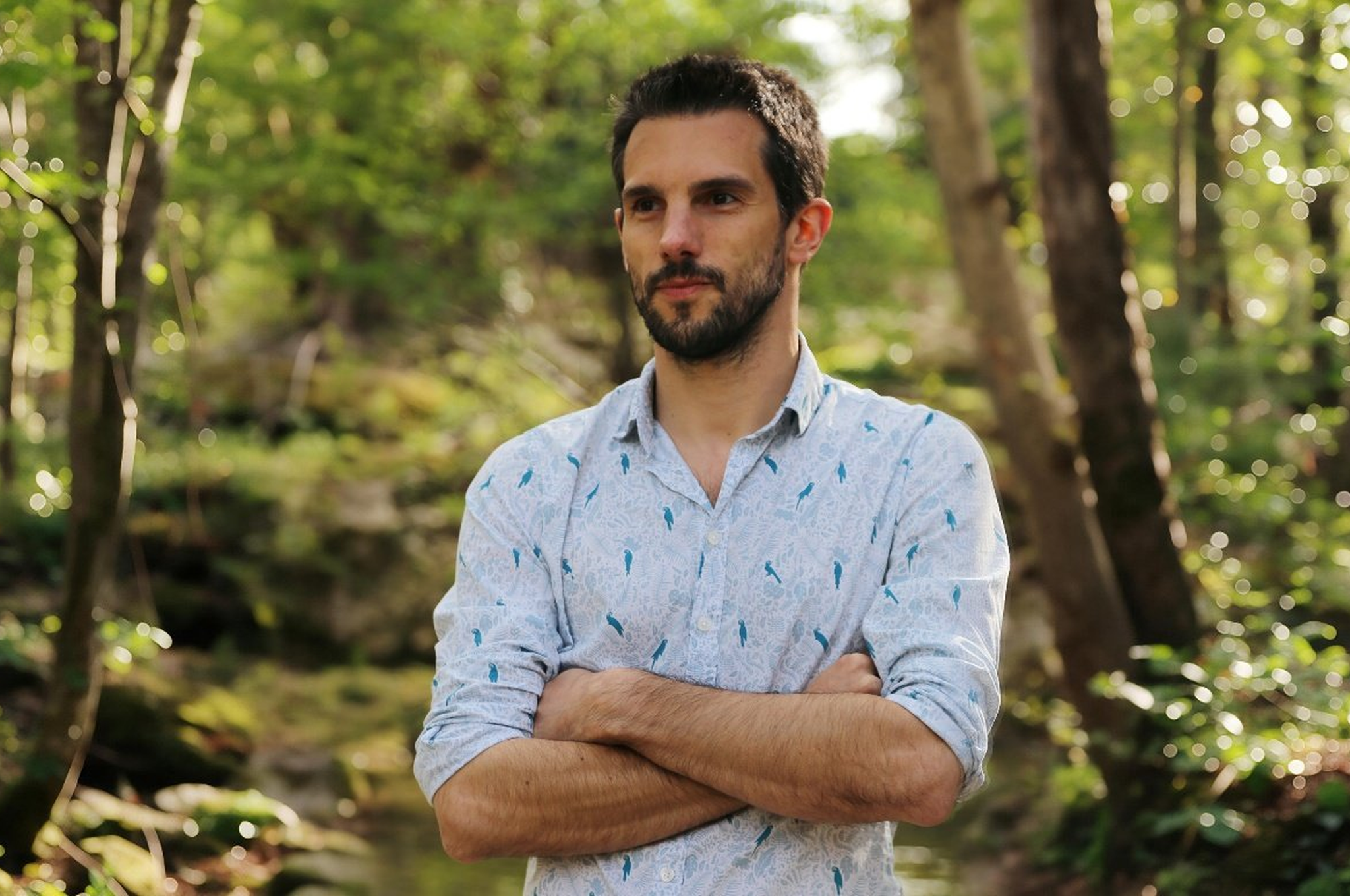
“What I particularly appreciate about working with Novogene is the combination of excellent data quality, efficient project management, speed of sequencing, and responsive scientific support,” he said.
Building a lasting collaboration
Dr Condamine first heard about Novogene through colleagues in the evolutionary biology community. Those early projects grew into a long-term collaboration, supporting his research and that of colleagues in his laboratory.
As the research expanded, so did the sequencing needs: more samples, multiple batches and larger collaborative datasets. Clear communication and dependable project support have remained important throughout.
“Knowing that the sequencing component is in trusted hands allows us to focus on the biological questions and on interpreting the results,” he explained.
Reconstructing the evolutionary history of butterflies
Dr Condamine’s GAIA project, funded by the European Research Council (ERC), investigated how interactions between swallowtail butterflies (Papilionidae) and their host plants have shaped the butterflies’ diversification.
From March 2020 to February 2025, the project combined international collaboration with field sampling and work in museum collections. By combining genomic and ecological data, the researchers explored how changes in host-plant use relate to butterfly diversification (see also Allio et al., 2021).
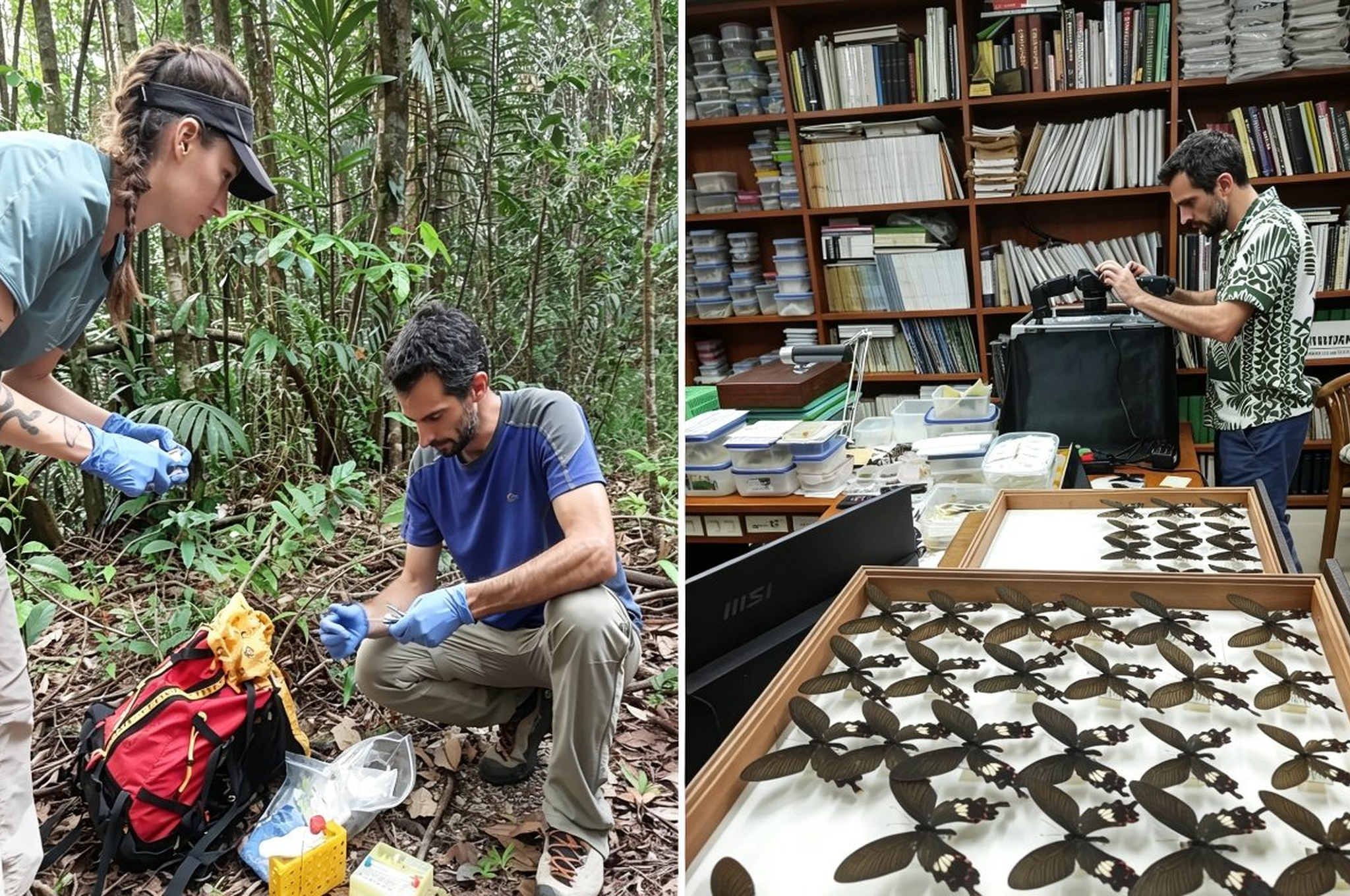
In the European Commission’s summary of GAIA’s results, Dr Condamine reports that the project generated genomic data for 99.8% of swallowtail species. The team’s taxonomic framework recognised roughly 640 species in the family. Sampling included rare species and some available only as historical museum specimens, which required methods optimised for degraded DNA.
A published example is Reboud and colleagues’ study in Systematic Entomology, with Dr Condamine as a corresponding author. Using whole-genome data, the team clarified relationships within Leptocircini, a group of swallowtail butterflies that includes dragontails, kite swallowtails and swordtails. The findings helped resolve longstanding taxonomic questions. Novogene Europe’s Cambridge laboratory prepared short-read Illumina libraries used alongside long-read data for the study’s new reference genomes.
Linking evolution within species to biodiversity
This research continues with Dr Condamine’s ERC-funded ORION project, which runs from October 2025 to September 2030.
ORION investigates whether evolutionary processes within species can help predict how quickly new species arise and traits evolve. Focusing on swallowtail butterflies, it will combine genomic, trait and ecological data from species and subspecies to test these connections.
For Dr Condamine, a reliable sequencing partner helps him focus on these questions.
“I look forward to continuing our collaboration and to the exciting discoveries that lie ahead,” he said.
Novogene Europe thanks Dr Condamine and his collaborators for their continued trust and for sharing their research with the wider scientific community.
Beyond the butterfly genomics work featured here, Novogene Europe provides a broader portfolio of sequencing and complementary multi-omics services, with project support tailored to researchers’ study aims.
Note: All photographs courtesy of Dr Fabien Condamine.
Related publications
Reboud, E. L., Nabholz, B., Chevalier, E., Lafon, B. J., Tilak, M.-K., Mielke, C. G. C., Cotton, A. M. and Condamine, F. L. (2025). Clarifying the phylogeny and systematics of the recalcitrant tribe Leptocircini (Lepidoptera: Papilionidae) with whole-genome data. Systematic Entomology, 50(2), 387–414. https://doi.org/10.1111/syen.12661
Allio, R., Nabholz, B., Wanke, S., et al. (2021). Genome-wide macroevolutionary signatures of key innovations in butterflies colonizing new host plants. Nature Communications, 12, 354. https://doi.org/10.1038/s41467-020-20507-3